
Process Server Newcastle
All enquiries handled in complete confidence.
Your Trusted Newcastle Process Servers
Process Serving in the Newcastle area for over 40 years

Trusted Process Servers in Newcastle
- Fast, CPR-compliant process serving across Newcastle
- Documents served: statutory demands, injunctions, divorce petitions, witness summons
- Handled with precision, discretion, and full legal compliance
- Up to three delivery attempts included
- Proof of service supplied for your records
Call our Newcastle Process Serving Office today on 0191 406 6126 or email us at process@bluemooninvestigations.co.uk
CPR-Compliant Service
Our experienced process servers deliver documents strictly in line with Civil Procedure Rules. From court papers to statutory demands, we ensure every instruction is handled with precision and legal accuracy.
Nationwide Coverage
With trusted process servers across the UK, we handle instructions quickly and efficiently, wherever service is required. Local knowledge combined with national reach ensures timely delivery in any jurisdiction.
Confidential & Discreet
We handle every instruction with complete confidentiality and discretion. Sensitive information is protected, and all cases are managed with the highest professional standards.
Timely & Reliable
Deadlines matter in legal proceedings. Our team is committed to prompt service, with attempts made within agreed timescales and full proof provided, giving you confidence your case stays on track.
Select the process serving option that best meets your case requirements — each delivered with full legal compliance and professional care.
Fixed-Fee, CPR-Compliant Service
Basic Process Serve
Fixed Fee – No Hidden Costs
One Service Attempt Included
Ideal for Non-Urgent Matters
First Attempt Within 7 Days
CPR-Compliant Procedure
Proof of Service Provided
Printing Up to 25 Pages Included
Prices from £110
Fixed-Fee Service with Full Updates
Standard Process Serve
Fixed Fee – No Hidden Costs
Up to 3 Service Attempts Included
First Attempt Made Within 24–48 Hours
CPR-Compliant Procedure
Proof of Service Provided
Live Updates After Every Attempt
Printing Up to 50 Pages Included
Prices from £165
Fixed-Fee Urgent Service – First Attempt Within 24 Hours
Priority Process Serve
Fixed Fee – Clear and Upfront Pricing
Prompt Allocation to Nearest Server
First Attempt Made Within Hours
CPR-Compliant Procedure
Proof of Service Provided
Live Updates After Every Attempt
Printing Included Up to 50 Pages
Prices from £195
What is Process Serving in Newcastle?
Process serving in Newcastle is the formal delivery of legal documents, carried out in line with the Civil Procedure Rules (CPR). Our experienced Newcastle process servers act for solicitors, businesses, private clients, and the courts, ensuring documents are served correctly and proof of service is provided. Where recipients are evasive, we use tracing methods or apply for substituted service to complete delivery in full compliance with the rules.
How Our Newcastle Process Serving Works
Standard Procedure
- Receipt & Confirmation – As soon as we receive your documents, we email you confirmation of safe receipt.
- Case Management – All details are securely logged in our client management system, with digital copies created where needed.
- Assignment – Your instruction is allocated to our nearest available Newcastle process server for speed and efficiency.
- First Attempt – We aim to carry out the first visit within 24 hours, if using our Standard Service.
- Multiple Visits – If service cannot be completed immediately, up to three attempts are made at varied times of day.
- Client Updates – You receive real-time progress reports throughout the process.
- Further Instructions – Any issues are referred back to you promptly for guidance.
- No Unauthorised Costs – We never incur additional expenses without your prior consent.
What Happens Next
- Successful Service – Once good service is achieved, we prepare all required paperwork (including swearing, if necessary). Hard copies can be posted, or digital copies supplied for speed.
- Unsuccessful Attempts – If service cannot be achieved, our process server prepares a detailed witness statement with supporting evidence of attempts, assisting any application for substituted service.
Our Quality Assurance for Process Serving in Newcastle
At Bluemoon Investigations, we are committed to providing a reliable, transparent, and CPR-compliant process serving service across Newcastle.
Our Promises:
- Full CPR Compliance – every serve is carried out in line with Civil Procedure Rules.
- Prompt Action – first attempts made quickly, with most serves completed within 48 hours.
- Fixed Fees – clear, upfront pricing with no hidden costs.
- Proof of Service – digital certificates supplied, hard copies available on request.
- Real-Time Updates – progress reports after every attempt.
- Priority Service Available – urgent instructions actioned within hours where required.
Ajay Singh
“Bluemoon served urgent legal documents on our behalf quickly and discreetly. Their updates throughout the process gave us complete confidence.”
Samuel Ogindae
“We needed a statutory demand served on short notice. Jason handled it professionally, with sworn proof of service provided without delay.”
James Askwith
“Our firm uses Bluemoon regularly for process serving. They are reliable, compliant with the rules, and always deliver affidavits on time.”
Prefer to Speak to Someone First?
No forms, no waiting — just straightforward help from an experienced Newcastle process server. Call our Newcastle office on 0191 406 6126 or email process@bluemooninvestigations.co.uk and we’ll respond promptly to guide you through your next steps.
Process Serving in Newcastle, but with Compassion
The role of a process server in Newcastle often involves delivering difficult news—something people may not want to receive. We understand that serving legal documents can sometimes provoke strong emotions and, in rare cases, even lead to confrontation.
Our approach is always to serve with professionalism and compassion. At the same time, every one of our agents is trained to recognise when a firmer stance is needed to ensure the papers are served correctly and without delay.
With extensive experience and specialist training, our Newcastle process servers are equipped to handle all situations calmly and effectively, ensuring the task is completed with dignity, discretion, and professionalism.
Morris McNulty
“An evasive respondent made service difficult, but Bluemoon’s persistence and detailed witness statement supported our application for substituted service.”
Susanne Leftwich
“The process server kept us informed at every stage and ensured the papers were served within the required timescales. Excellent service.”
Greta Arben
“Bluemoon’s process serving is thorough and efficient. Three visits were made as standard, and the final proof was court-ready.”
Local Process Serving Offices in Newcastle
- Process Server Newcastle City Centre – Grainger Town, Quayside, Eldon Square, Central Station.
- Process Server Jesmond – Osborne Road, West Jesmond, South Jesmond.
- Process Server Gosforth – Regent Centre, South Gosforth, Brunton Park.
- Process Server Heaton – High Heaton, Shields Road, Heaton Park area.
- Process Server Ouseburn – Lime Street, Ouseburn Valley, The Malings.
- Process Server Byker & Walker – Byker Bank, Walker Riverside, St Peter’s Basin.
- Process Server Sandyford & Shieldfield – Portland Road, Shieldfield Estate, Starbeck Avenue.
- Process Server Gateshead – Gateshead Quays, Saltwell, Low Fell.
Useful Resources for Process Serving in Newcastle
Understanding the legal and compliance framework around process serving is essential. These trusted resources provide guidance and context:
- UK Government – Civil Procedure Rules (Part 6: Service of Documents)
- HM Courts & Tribunals Service
- Citizens Advice – Legal System Overview
- Law Society – Find a Solicitor
- GOV.UK – Court and Tribunal Forms (including N215 Statement of Service)
Regional Process Serving Hubs
Process Server Birmingham ·
Process Server London ·
Process Server Nottingham ·
Process Server Leeds ·
Process Server Liverpool
Other Services in Newcastle
In addition to professional process serving, Bluemoon Investigations provides a full range of investigative services across Greater Newcastle.
- Private Investigation Services in Newcastle
- People Tracing in Newcastle
- Surveillance Services
- Background Checks
Wherever you are based in Newcastle or the surrounding towns, our team delivers fast, discreet, and compliant investigative solutions.
People tracing in Newcastle — expert private investigator services from Bluemoon Investigations
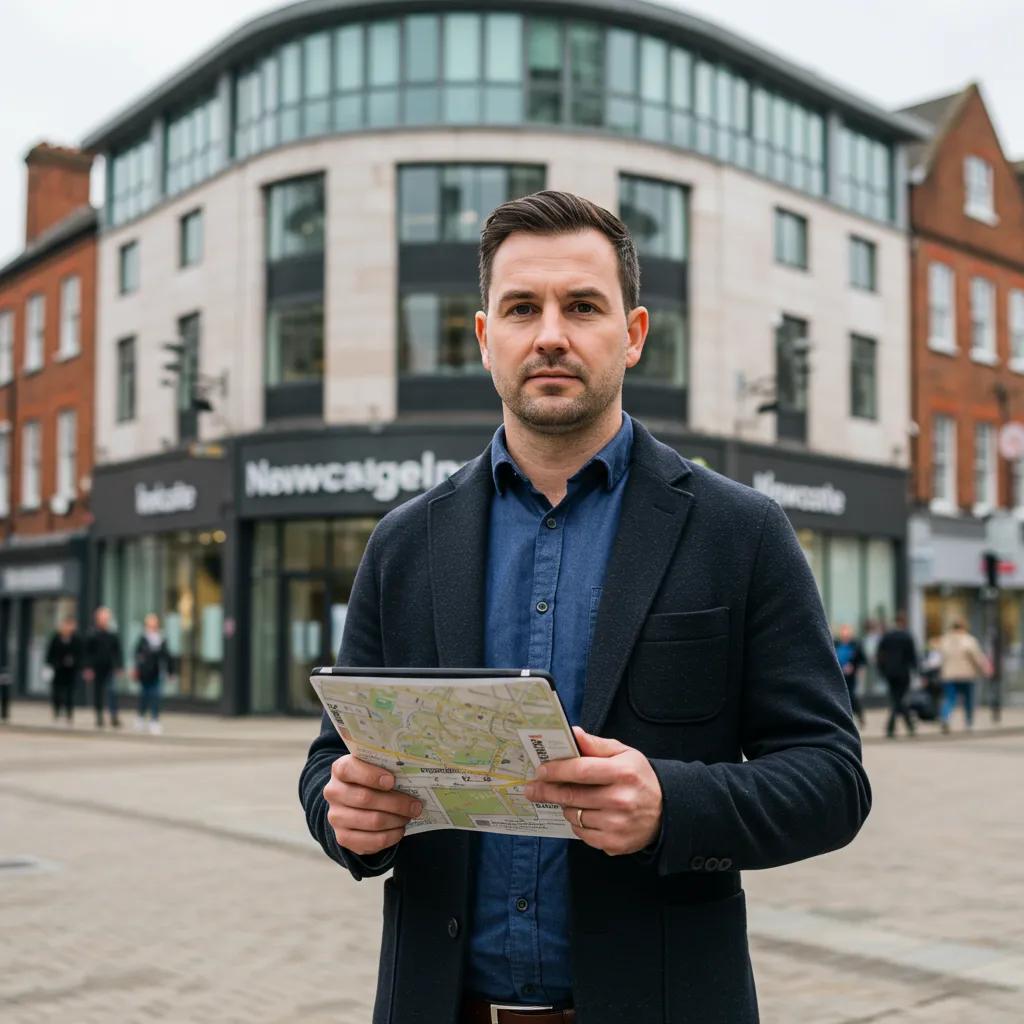
People tracing in Newcastle is a specialist investigative service that locates a living person’s current contact details, whereabouts or verifiable connections using a blend of online research and local field enquiries. Bluemoon Investigations provides these expert services, combining decades of experience with local Newcastle knowledge to deliver reliable outcomes. This guide explains how tracing works in Newcastle, the common instruction types—missing persons, debtors, witnesses and beneficiaries—and the mix of OSINT and on-the-ground checks we use to verify results lawfully. Individuals and organisations often face incomplete records, out‑of‑date addresses or subjects who minimise their online footprint; targeted people tracing cuts through that uncertainty and provides clear, actionable outcomes. Read on for practical steps you can take before instructing an investigator, the main timeframes and cost drivers for tracing work, and how findings are recorded so they can be used operationally or in a legal context. Keywords such as people tracing Newcastle, find someone in Newcastle and debtor tracing Newcastle are woven through this guide to keep it useful and relevant.
What is people tracing and how does it work in Newcastle?
People tracing combines open-source research, licensed databases and local enquiries to locate and verify a person’s current contact details and status. The process ties together data points—public records, commercial datasets, social traces and field confirmations—to deliver a reliable outcome that meets the client’s objective, whether that’s contact, service of documents or verification for recovery. A structured approach gives faster, evidence-based results with minimal intrusion, prioritising lawful and proportionate techniques. Local knowledge in Newcastle speeds searches: street-level familiarity, region-specific sources and community contacts all reduce wasted enquiries. Understanding the typical phases of a trace helps clients provide useful starting information and set realistic expectations for cost and timescale.
This section summarises the main tracing methods and presents a clear comparison of sources, limits and outcomes.
Each tracing technique has strengths and practical limits depending on the subject’s online footprint and the legal setting.
| Technique | Primary Data Sources | Typical Outcome |
|---|---|---|
| OSINT analysis | Social networks, web archives, directory listings | Fast leads and digital connections to pursue |
| Database search | Credit, utilities, electoral and commercial datasets | High-quality contact candidates when indexed |
| Field enquiry | Local visits, interviews, observational checks | Physical verification and admissible confirmation |
Because each technique complements the others, combining OSINT to generate leads, dataset checks to narrow candidates and fieldwork to confirm occupancy typically produces the most dependable results for Newcastle enquiries. The following sections explain common service types and how investigators put these techniques into practice.
What types of people tracing services are available in Newcastle?

People tracing in Newcastle is delivered as a set of specialist services tailored to different legal and practical needs. Typical categories are missing person tracing, debtor tracing, witness tracing and beneficiary tracing—each aimed at producing a specific deliverable such as a verified address, phone number or evidence suitable for service. Missing person work focuses on welfare and safety and can involve liaising with local authorities where appropriate. Debtor and skip tracing are centred on locating subjects for contact or recovery by creditors. Witness and beneficiary traces are often instructed by legal practitioners to support litigation, probate or family law matters and require strict chain-of-evidence handling. Choosing the right service type ensures the correct methodology and level of verification are applied.
Common tracing types and when they’re used:
- Missing person tracing: family or welfare checks where safety is the priority.
- Debtor tracing: businesses and creditors seeking contact details for recovery.
- Witness tracing: solicitors requiring witness contact or attendance for proceedings.
- Beneficiary tracing: probate and estate matters needing lawful location of heirs.
These categories make it easier to brief an investigator and to set expectations about deliverables for each instruction.
How does Bluemoon Investigations conduct people tracing in Newcastle?
After a focused initial briefing, Bluemoon Investigations combines OSINT, authorised database queries and discreet local fieldwork to turn leads into verified results, always operating within lawful and proportionate boundaries. We start with a structured information intake—names, dates of birth, last known addresses and any associates—to reduce wasted effort and speed outcomes. Investigators run targeted online sweeps and dataset searches to build candidate matches, then use field enquiries or verification contacts to confirm residency, occupancy or contactability. Reports emphasise verifiable evidence, dated sources and clear next steps so findings can be used operationally by solicitors, recovery teams or private clients. This method balances speed, evidential rigour and client confidentiality through controlled reporting and anonymised communications where needed.
The next section explains why clients in Newcastle should choose an experienced provider and how institutional safeguards and guarantees reduce risk.
Why choose Bluemoon Investigations for people tracing in Newcastle?
Choosing a provider with established procedures and clear guarantees reduces risk, especially where legal or recovery outcomes depend on the validity of results. Bluemoon Investigations is a specialist private investigation firm with national reach and local Newcastle expertise, combining decades of sector experience with discreet, structured tracing work. Eligible instructions can be covered by a No Trace, No Fee guarantee and many suitable cases are handled within 48 hours—helping to control cost and speed decision-making. Our approach brings methodical data correlation, secure handling of client material and a national field network that preserves confidentiality. For clients who need proportionate, legally defensible trace results, these practical assurances form a trust-based proposition.
How our operational strengths deliver client advantage, and the practical mechanics of the guarantee, are set out below.
How does Bluemoon’s 40+ years’ experience benefit Newcastle clients?
Decades of operational experience produce refined workflows, established supplier and local contact networks, and a clear sense of legal boundaries that reduces wasted effort and increases success rates. Our investigators know which datasets work best for Newcastle profiles, how to approach sensitive enquiries without alerting the subject, and how to document findings so they’re usable by solicitors and recovery teams. That institutional knowledge shortens turnaround times because experienced practitioners anticipate dead ends, triage leads efficiently and deploy the right mix of digital and field resources. Experienced teams also manage legal risk: they avoid techniques that could harm admissibility or breach data protection rules, protecting both client objectives and reputation.
These operational advantages support the guarantee and compliance commitments described next.
What does the “No Trace, No Fee” guarantee mean for Newcastle people tracing?
A conditional No Trace, No Fee guarantee means clients are charged only when an agreed, verified outcome is delivered—typically a confirmed address or contact that meets verification criteria set at instruction. This reduces the financial risk of commissioning a trace, particularly where initial information is limited, and aligns incentives towards verifiable results. Typical terms spell out eligibility and exclusions—for example, very sparse starting data or extensive international enquiries may fall outside the guarantee—so a clear brief at the outset is essential. The practical effect is predictable client exposure and a commercial incentive for the investigator to focus on actionable leads. Requesting written terms and success criteria at engagement prevents misunderstandings and ensures the guarantee operates as intended.
- What counts as a successful trace and acceptable verification.
- Which case types or jurisdictions are excluded from the guarantee.
- Any administrative or disbursement fees payable regardless of outcome.
- Expected timeframes tied to the guarantee terms.
Confirming these points in advance protects clients and aligns expectations for both parties.
How much does people tracing cost in Newcastle?

Costs for people tracing in Newcastle depend on complexity, urgency and the techniques needed to locate and verify a subject. Pricing is normally transparent and linked to identifiable drivers: the quality of initial information, whether the subject uses aliases or maintains a low online profile, the geographic scope (local, national, international) and the need for fieldwork or surveillance. Many providers offer a starter fee for database-led traces and scale charges for more involved enquiries; conditional guarantees such as No Trace, No Fee can also affect billing. Understanding these drivers helps clients supply the most useful starting information and choose an engagement model—single instruction, retainer or conditional fee—that fits their needs and budget.
The table below highlights common cost drivers and their typical impact.
| Cost driver | Attribute | Typical impact on cost |
|---|---|---|
| Information completeness | Names, DOB, last known address, associates | Lowers search time and cost |
| Complexity | Aliases, cross‑border links, low digital footprint | Increases time and resource needs |
| Urgency | 24–48 hour turnaround vs routine | Raises cost for expedited resources |
| Fieldwork requirement | Local visits, stakeouts or witness interviews | Adds travel and time costs |
Below are practical actions clients can take to help anticipate and reduce fees.
What factors influence the cost of people tracing services in Newcastle?
Knowing the main cost drivers helps clients reduce fees by providing rich starting data and realistic objectives. Information quality is the single biggest determinant: accurate full names, dates of birth, previous addresses and known associates greatly shorten search time, whereas vague or minimal identifiers require broader, slower searches. Complexity—multiple identities or cross‑border activity—means layered techniques and third‑party queries that raise licensing and time costs. Urgency adds a premium: delivering verified outcomes within 48 hours usually requires reallocating experienced staff and prioritising fieldwork. Legal or evidential requirements (for court, probate or formal recovery) demand stricter documentation and chain‑of‑custody procedures, which also increase administrative effort and cost.
- Provide as much precise identifying information as possible.
- Tell us the intended use of results so we apply the right verification level.
- Consider staged instructions to test initial leads before full fieldwork.
- Discuss conditional guarantees to align commercial risk.
These steps reduce unnecessary work and deliver clearer, quicker outcomes.
Are there payment options or guarantees for people tracing in Newcastle?
Providers typically offer a mix of payment structures: fixed‑fee starter packages for straightforward traces, hourly or time‑based billing for open enquiries, and conditional or success‑fee models like No Trace, No Fee for eligible cases. Bluemoon Investigations uses conditional guarantees to lower client risk and delivers GDPR‑compliant, often rapid results; clients should request the exact terms that apply to their case. Retainers are available for volume or long‑running work, while single instructions suit isolated questions such as one beneficiary or debtor trace. Administrative disbursements—database access fees or travel costs—are explained up front for full transparency.
Check these engagement elements before instruction:
- Payment model (fixed, hourly, retainer, conditional).
- What the guarantee covers and any exclusions.
- How disbursements are handled and invoiced.
- Expected reporting format and any payment‑linked milestones.
Clear terms protect both budgets and investigative effectiveness.
Who can benefit from people tracing services in Newcastle?
People tracing supports a broad range of clients—from legal professionals needing admissible witness contacts to businesses pursuing debtor recovery and private individuals seeking lost family or friends. Deliverables are tailored to each use. Solicitors and probate teams often require documented verification to support service or beneficiary identification, which demands strict evidence handling. Businesses and insurers use debtor tracing to locate parties for recovery or claims validation, where contact details must be actionable. Private individuals typically want contact details or welfare checks and often prioritise discretion and speed. Knowing how each client type uses trace outputs allows investigators to match verification standards and reporting formats to be immediately useful.
| Client type | Typical use case | Key deliverable |
|---|---|---|
| Solicitors | Witness or beneficiary location | Documented address and verification report |
| Businesses / creditors | Debtor location for recovery | Actionable contact details and trace chronology |
| Insurance companies | Claims validation or fraud checks | Verified identity and situational evidence |
| Private individuals | Reconnection or welfare checks | Discreet contact information and recommended next steps |
This mapping sets expectations and ensures the investigator applies the appropriate verification standard for the intended use of results. The sections that follow look more closely at solicitor and commercial use cases.
How do legal professionals use people tracing for witness and beneficiary location?
Legal professionals rely on trace results to support service, witness attendance and beneficiary identification with the evidential rigour required for court and probate workflows. Investigators compile documented verification—source citations, date‑stamped observations and witness statements where relevant—that align with disclosure and chain‑of‑evidence needs so solicitors can proceed with confidence. Correctly handled trace results also reduce the risk of contested service or disputes over entitlement by providing contemporaneous verification of residence or contact. When working with legal clients, investigators prioritise transparent methods and secure transfer of evidence to protect admissibility and comply with professional conduct rules.
Solicitor-focused priorities when instructing a trace:
- Clear brief on the legal purpose and required standard of proof.
- Agreement on acceptable verification types and reporting format.
- Clarity about any disclosure obligations connected to the case.
- Timetable aligned with court or probate deadlines.
Addressing these priorities helps trace findings fit neatly into legal processes and reduces procedural risk.
How do businesses and insurance companies use debtor tracing in Newcastle?
Businesses, recovery agents and insurers use debtor tracing to re‑establish contact, validate addresses for enforcement or detect potential fraud through identity verification and activity patterns. Commercial traces are practical: verified contact channels, occupancy evidence and a documented chronology to support escalations or enforcement. For insurers, trace findings can reveal misrepresentation or confirm a claimant’s location relative to policy terms, aiding claims handling and fraud prevention. Clear objectives—recovery, service, validation—allow investigators to apply the most cost‑effective mix of database searches and local enquiries to produce usable, admissible evidence.
Typical commercial trace deliverables:
- Verified contact details with source citations.
- Chronology of movements or occupancy where relevant.
- Recommendations for next action (service, enforcement, legal referral).
- Secure evidence package suitable for internal escalation.
These outputs support practical recovery and compliance workflows for commercial clients.
How does Bluemoon Investigations ensure legal compliance and confidentiality in Newcastle?
Legal compliance and strict confidentiality are fundamental to ethical people tracing. Good practice combines adherence to UK data protection principles with operational controls that limit exposure and protect client interests. Bluemoon Investigations applies GDPR‑aligned handling to client data, documents the lawful basis for processing, practises data minimisation and stores material securely with restricted access so only authorised staff can view sensitive instructions. Investigative planning emphasises proportional methods and avoids covert activity that would breach legal limits, ensuring evidence remains admissible and instructions do not create legal risk. Confidentiality is reinforced through anonymised reporting options, discreet billing references and secure report delivery to nominated contacts.
| Safeguard | Purpose | Practical application |
|---|---|---|
| Lawful basis review | Ensure legal processing | Case‑level assessment before data searches |
| Data minimisation | Reduce unnecessary exposure | Limit datasets queried to those needed |
| Access controls | Protect sensitive material | Restricted staff access and encrypted storage |
| Discreet reporting | Maintain client confidentiality | Anonymised reports and secure delivery methods |
These safeguards create a defensible compliance posture and protect both client and investigator from legal and reputational risk. The following subsections describe the legal framework and practical protections in more detail.
What are the GDPR and UK legal requirements for people tracing?
People tracing must comply with UK data protection law and other relevant statutes, which means processing personal data only where a lawful basis exists and applying proportionality, accuracy and retention limits. Legitimate interests or explicit client instruction often justify searches in private investigations, but investigators must document the lawful basis and balance it against individual privacy rights. The Investigatory Powers Act and related laws restrict surveillance and interception; experienced investigators design enquiries to avoid unlawful techniques and to produce admissible evidence. Clear client briefings, recorded decisions about data sources and retention schedules form part of a compliance‑driven approach to tracing.
Being aware of these legal boundaries helps clients frame requests that remain lawful and effective.
OSINT for locating missing persons: ethical hacking and crowdsourcing
Open‑Source Intelligence (OSINT) is the collection of information from publicly available sources and its analysis with open‑source tools to produce actionable intelligence. OSINT is used across public‑interest and investigative work, including locating missing people through ethical crowdsourcing and toolsets.
Ethical hacking for a good cause: Finding missing people using crowdsourcing and open‑source intelligence (OSINT) tools, E. Dincelli, 2023
How does Bluemoon protect client data and maintain discretion?
Operational confidentiality is achieved through defined procedures and technical safeguards that limit exposure from instruction to reporting. Bluemoon Investigations uses secure channels for case correspondence, restricts report access to authorised personnel and offers anonymised reporting formats when clients need minimal detail on invoices or correspondence. Field operatives follow discreet protocols and avoid actions that attract public attention, protecting subject anonymity until contact is authorised or necessary. These measures reduce the risk of information leakage on sensitive tracing assignments.
- Secure, limited‑access storage for case files.
- Anonymised reporting and discreet billing on request.
- Discrete field protocols to minimise subject awareness.
- Case‑level legal review before contentious techniques are used.
These practices preserve confidentiality without compromising the usefulness or quality of investigative outcomes.
How quickly can Bluemoon Investigations deliver people tracing results in Newcastle?
Turnaround depends on case complexity, the quality of starting information and whether fieldwork or international liaison is needed, but many routine traces yield verified results quickly when sufficient identifiers are provided. For straightforward enquiries with good initial data, a verified result and report can often be delivered within 48 hours, driven by a prioritised OSINT and database workflow followed by prompt local verification. More complex matters—those with minimal digital footprints, cross‑border elements or legal constraints—need additional time for layered searches and lawful fieldwork and may take several days to weeks. A clear brief and prompt provision of documents speed the process and reduce unnecessary iterations.
Simple steps clients can take to speed a trace:
- Provide full names, dates of birth and last known addresses where possible.
- Include known associates or workplaces to broaden search vectors.
- State the intended use of results so we match verification levels.
- Authorise reasonable disbursements in advance for rapid fieldwork.
Following these steps focuses investigator effort and often secures the fastest reliable outcomes.
What is the typical people tracing turnaround time in Newcastle?
When accurate identifying information is supplied, initial leads and a verified result are commonly available within 48 hours, reflecting a dataset‑first approach followed by quick verification. This applies to traces that don’t require extended fieldwork, international cooperation or statutory steps; such complexities extend timescales. Investigators will set an expected timeframe during the initial case plan and flag any legal or logistical issues that could lengthen delivery. Clients should prioritise a complete brief and agree milestones at instruction to ensure predictable timing.
Clients needing immediate prioritisation should discuss expedited handling and associated commercial terms at engagement.
How are clients updated during the people tracing process?
We provide staged, transparent updates that keep clients informed without compromising tactics. On instruction, clients receive an acknowledgement and a case plan outlining methods, estimated costs and target milestones; progress updates follow an agreed cadence—daily for urgent matters or periodic for routine enquiries—highlighting interim findings and any course changes. Final delivery includes a verified report that summarises methods, sources, evidence and recommended next steps, delivered securely to the authorised contact. Regular, documented communications create clarity and let clients act quickly on verified outcomes.
- Acknowledgement and case plan on instruction.
- Interim progress notes at agreed intervals.
- Immediate notification of significant leads or legal issues.
- Final verified report with documented sources and recommendations.
These touchpoints create a clear audit trail and help clients coordinate follow‑up actions promptly.
Bluemoon Investigations welcomes confidential enquiries about people tracing in Newcastle and offers discretion, conditional guarantees and a clear compliance framework to reduce client risk. For a confidential discussion about a specific case, contact us through the firm’s secure channels or our verified local business profile to request an introductory consultation; our engagement terms set out No Trace, No Fee eligibility, reporting formats and typical 48‑hour handling for suitable cases. Whether you are a solicitor seeking witness location, a business needing debtor tracing across Newcastle, or an individual trying to find someone locally, a short factual brief improves outcomes and lets us scope a costed plan quickly. Our focus on lawful methods, rapid verification and discreet handling ensures trace work supports practical next steps while protecting client confidentiality.
Frequently asked questions
What should I do before hiring a private investigator for people tracing?
Gather as much information as you can about the person you want to trace: full names, dates of birth, last known addresses and any known associates. The clearer the brief, the quicker and cheaper the investigation. Also be ready to explain how you intend to use the results so the investigator can recommend the appropriate verification level and lawful methods.
How can I ensure the privacy of the person being traced?
Work with a reputable investigator who follows legal and ethical standards, including GDPR compliance. Ask about confidentiality measures—anonymised reporting, secure communication channels and discreet billing. Make sure the methods proposed are proportionate and lawful to avoid unnecessary intrusion into the subject’s life.
What are the potential legal implications of people tracing?
People tracing raises data protection and privacy considerations. Investigators must operate within UK data protection law and other relevant statutes; processing personal data requires a lawful basis and proportionality. Using information obtained unlawfully can lead to legal challenges, so it’s important to instruct a qualified investigator who understands the legal landscape and documents decisions about sources and retention.
How do I know if the tracing results are reliable?
Reliable results come with clear documentation: source citations, verification methods and supporting evidence. A reputable investigator will provide a detailed report explaining how findings were obtained and verified. Where available, a No Trace, No Fee guarantee can give additional commercial assurance of the investigator’s commitment to verifiable outcomes.
Can I use the tracing results in legal proceedings?
Yes—if the information was obtained lawfully and the investigator followed proper evidence handling and documentation protocols. Discuss your intended legal use with the investigator so they record findings in a way that supports admissibility in litigation, probate or other formal processes.
What types of cases are most suitable for people tracing services?
People tracing is useful for locating missing persons, debtors, witnesses and beneficiaries. Solicitors use traces to support court work, businesses to recover debts, and individuals to reconnect with lost family or friends. Clarifying the context and intended use of results ensures the investigator applies suitable methods for each case.
How can I prepare for a consultation with a private investigator?
Bring all available details: names, dates of birth, last known addresses, phone numbers and any known associates. Be clear about your objective and the intended use of the trace results, and mention any timing or budget constraints. This preparation lets the investigator give a more accurate assessment and propose the most efficient approach.