

Ethical Use of Drone Surveillance

Ethical Drone Surveillance UK: Legal, Privacy, and Investigative Best Practices
Ethical drone surveillance revolutionises private investigations by delivering precise aerial intelligence while rigorously safeguarding individual rights. At Bluemoon Investigations, we expertly combine cutting-edge unmanned aerial vehicles with strict adherence to UK regulations, ensuring every flight is lawful, proportionate, and entirely confidential. This comprehensive guide will illuminate the legal prerequisites for drone operations, the essential privacy and data-protection measures, the advanced technologies that elevate evidence collection, scenarios where drones significantly outperform traditional methods, illustrative real-world case examples, frequently asked questions from practitioners, and how to engage our discreet services. By the conclusion, you will possess a clear understanding of how drone surveillance can powerfully bolster investigations without ever compromising ethics or compliance.
Navigating the Legal Landscape: Drone Surveillance for Private Investigators in the UK
For private investigator drone operations to be legally sound and for the gathered evidence to be admissible, strict compliance with aviation, data protection, and evidential standards is paramount. Legally compliant deployment necessitates unwavering adherence to Civil Aviation Authority (CAA) regulations, the Air Navigation Order 2016, the Civil Aviation Act 1982 (including its amended provisions for UAV operation), and all relevant insurance and licensing obligations. A thorough understanding of these interconnected rules forms the bedrock for both safe flight operations and the reliable collection of compelling evidence, guiding operators from the initial permission stages right through to courtroom presentation.
Why Private Investigators use Drones in the UK
The use of drones by private investigators in the UK is legal, provided operations strictly comply with Civil Aviation Authority (CAA) regulations and data protection laws. Commercial operators are required to obtain CAA certification and appropriate insurance, and adhere to specific flight restrictions. Legally obtained drone footage is admissible as evidence in court, reinforcing the importance of compliant and ethical operation.
Source: Insight Investigations (via Vertex AI Search), 2025
Key UK Drone Legislation Governing Private Investigator Operations

UK private investigators must meticulously operate within the framework of the following critical regulations:
- The Civil Aviation Authority (CAA) Drone and Model Aircraft Code
- The Air Navigation Order 2016 (Statutory Instrument 2016 No. 765)
- The Civil Aviation Act 1982 (as amended for UAV operations)
These legislative instruments precisely define airspace restrictions, permissible flight altitudes, the fundamental responsibilities of operators, and designated no-fly zones. Diligent adherence to these laws effectively mitigates operational risks and establishes a clear pathway for ethically sound surveillance that profoundly respects public safety and legal boundaries.
Essential Licences and Certifications for Drone Pilots
Drone pilots engaged in investigative roles require specific, mandatory authorisations:
- An Operator ID, registered with the CAA for any unmanned aerial vehicle operated
- A Flyer ID qualification (specifically, the A2 Certificate of Competency for drones exceeding 250g)
- Permission for Commercial Operation (PfCO) or its equivalent successor approval from the CAA
- Comprehensive public liability insurance that specifically covers aerial activities
Meeting these stringent certification standards unequivocally demonstrates professional competence, secures essential regulatory approval, and crucially underwrites potential liability, thereby protecting both investigators and their clients from significant legal and financial repercussions.
The Impact of GDPR on Drone Surveillance Operations
Indeed, the General Data Protection Regulation (GDPR) is fully applicable whenever personal data is captured:
- Lawful Basis: All surveillance activities must be underpinned by a legitimate interest or explicit consent obtained from the data subject.
- Data Minimisation: It is imperative to record only the essential footage and associated metadata directly relevant to the investigation.
- Data Protection Impact Assessment (DPIA): A thorough assessment of potential privacy risks must be conducted before any deployment.
- Retention and Security: All recordings must be stored securely in encrypted archives with strictly controlled access protocols.
Integrating GDPR principles into the very fabric of flight planning and data handling protocols ensures the utmost respect for individual rights and aligns drone surveillance practices with the highest global data-protection standards.
Admissibility of Drone Footage as Evidence in UK Courts
Absolutely, drone-captured evidence is fully admissible, provided it has been obtained through lawful means:
- Chain of Custody: A meticulous record must be maintained for every transfer of the footage.
- Metadata Integrity: Crucial elements such as timestamps, GPS coordinates, and operator logs must be preserved without alteration.
- Expert Witness Statements: These are vital to corroborate the authenticity and context of the evidence.
- Compliance Certificates: Documentation demonstrating adherence to both CAA and GDPR requirements is essential.
Strictly adhering to these evidential safeguards transforms raw aerial imagery into reliable, court-ready intelligence that significantly strengthens legal cases and upholds the unimpeachable integrity of the investigative process.
Upholding Privacy and Data Integrity in UK Drone Surveillance
Ethical drone surveillance intrinsically embeds robust privacy safeguards throughout every phase: planning, data capture, analysis, and ultimate disposal. By consistently prioritising proportionality, maintaining transparency wherever operationally feasible, and implementing stringent security measures, investigators effectively minimise intrusion and rigorously uphold data-subject rights. These conscientious practices not only satisfy regulatory mandates but also cultivate invaluable trust with both clients and subjects, thereby reinforcing the inherent legitimacy of aerial monitoring.
The Domestic Use of Drones: An Ethical Analysis of Surveillance Issues
Research into the domestic application of drones highlights the ethical complexities of surveillance, balancing their utility with potential moral hazards. Key concerns include privacy infringements, data security vulnerabilities, and the potential for data misuse. The analysis advocates for robust policies governing data access, intended use, and accountability to ensure a balance between technological innovation and the protection of individual rights.
Source: ResearchGate (referencing Luppicini & So, Nelson & Gorichanaz, Wernaart et al., West & Bowman), 2025
Addressing Key Privacy Concerns in Drone Surveillance
Potential privacy risks are primarily associated with:
- Unwarranted overflight of private residential or commercial property.
- The capture of identifiable individuals without a clear, lawful basis.
- Extended duration tracking that could inadvertently create behavioural profiles.
- Insecure storage practices that may lead to unauthorised disclosure of sensitive data.
Effectively balancing legitimate investigatory needs with these critical concerns demands the establishment of clear operational boundaries, the implementation of robust data governance frameworks, and a commitment to constant ethical reflection to proactively prevent any potential misuse of surveillance capabilities.
Bluemoon Investigations' Commitment to GDPR Compliance
Bluemoon Investigations meticulously implements a comprehensive data-protection framework:
- Conducting thorough Data Protection Impact Assessments (DPIAs) for every individual surveillance engagement.
- Applying rigorous data-minimisation techniques to ensure focus remains solely on pertinent imagery and information.
- Utilising secure, encrypted storage solutions with strictly controlled access protocols for all recorded data.
- Establishing clear retention schedules that incorporate automatic deletion protocols for data past its required retention period.
These integrated measures combine strategic risk assessment with robust technical controls to maintain absolute alignment with both GDPR and the Data Protection Act 2018, ensuring every operation is defensible, discreet, and fully compliant.
ICO Guidance Relevant to Drone Surveillance Privacy
The Information Commissioner’s Office (ICO) provides essential, targeted guidance covering:
- Best practices for video surveillance and the handling of personal data.
- Requirements for privacy notices and the importance of transparency.
- Robust data security protocols for both cloud-based and on-premises storage solutions.
- Establishing lawful bases for data processing, including legitimate interests and explicit consent.
Diligently incorporating ICO recommendations ensures that investigatory workflows consistently reflect regulator expectations, significantly reducing the likelihood of enforcement actions and reinforcing our commitment to ethical data stewardship.
Unmanned Aerial Systems (UAS) / Drones Guidance
The Information Commissioner’s Office (ICO) provides comprehensive guidance for organisations utilising drones, underscoring the necessity of adhering to data protection regulations. This includes conducting Data Protection Impact Assessments (DPIAs) to evaluate privacy risks, ensuring transparency, securely storing collected data, and limiting continuous recording to what is strictly necessary and proportionate for the intended purpose.
Source: Information Commissioner’s Office (ICO), DWF Group, 2022-2025
Achieving Transparency in Covert Drone Operations
Transparency can be judiciously balanced with operational secrecy through several strategic approaches:
- Issuing broad privacy notices in public areas where obtaining individual consent is impractical.
- Limiting the disclosure of specific flight dates and times while meticulously retaining detailed logs for audit purposes.
- Committing to providing comprehensive post-operation reports for commissioned investigations.
This carefully calibrated approach effectively maintains the necessary confidentiality for conducting successful inquiries while simultaneously upholding accountability and demonstrating profound respect for data-subject rights, thereby bridging discretion with unwavering integrity.
Leveraging Advanced Drone Technologies for Ethical Investigations

Contemporary unmanned aerial vehicles are equipped with sophisticated high-resolution imaging, advanced thermal sensors, and intelligent analytics capabilities, enabling the collection of evidence with unparalleled precision and ethical consideration. By strategically selecting the optimal sensor suite and analytic tools, investigators can significantly reduce unnecessary data capture, maintain a sharp focus on relevant subjects, and demonstrably improve evidence quality, all while strictly adhering to proportionality principles.
Enhancing Evidence Collection with 4K Cameras and Thermal Imaging
Our advanced sensor technologies deliver:
- 4K Visual Cameras: Capture exceptionally detailed, court-grade imagery essential for accurate identification and contextual understanding.
- Thermal Imaging: Reveal heat signatures effectively in challenging low-light conditions or when subjects are obscured.
- Multispectral Sensors: Detect subtle material differences crucial for asset identification or environmental analysis.
Collectively, these powerful technologies expand operational capabilities and significantly enhance evidential clarity, crucially enabling highly targeted data collection that respects privacy by meticulously excluding irrelevant areas.
The Integral Role of AI in Ethical Drone Surveillance
AI-driven analytics provide critical support for ethical operations through:
- Automated Object Classification: Enables a focus on predetermined subjects, thereby minimising the capture of incidental bystander data.
- Anomaly Detection: Intelligently highlights unusual activity patterns, substantially reducing the need for continuous manual review of footage.
- Advanced Blurring Algorithms: Automatically obscure non-relevant individuals or sensitive details prior to detailed analysis.
Leveraging artificial intelligence ensures that investigators process only the most pertinent data, dramatically accelerating workflows and minimising privacy-intrusive exposure across vast volumes of collected footage.
Technology-Driven Discreet and Proportional Surveillance
Technological features that actively uphold proportionality include:
- Geofencing Capabilities: Precisely restrict flight paths to pre-authorised operational zones.
- On-board Processing: Filter and transmit only event-triggered video clips, reducing data volume.
- Low-Noise Propeller Systems: Significantly reduce public disturbance and maintain operational invisibility.
These advanced capabilities ensure that surveillance intensity remains precisely aligned with investigatory necessity, effectively preventing excessive monitoring and reinforcing ethical compliance at every critical phase of an operation.
Strategic Application: When Drone Surveillance Outperforms Traditional Methods
Drone surveillance emerges as the unequivocally preferred method when an aerial vantage point demonstrably enhances coverage, significantly reduces operational risk, and accelerates intelligence gathering far beyond the capabilities of static cameras or ground-based teams. A careful evaluation of efficiency, safety considerations, and potential privacy impact clearly delineates when an unmanned aerial approach offers distinct and superior investigative advantages.
Efficiency and Cost Advantages of Drone Surveillance
Drone operations consistently deliver:
- Rapid Deployment: Enables swift deployment without the need for fixed infrastructure or complex wire runs.
- Broad Area Coverage: Achieves comprehensive coverage of large areas in a fraction of the time required by traditional foot patrols.
- Scalable Flight Durations: Offers flexible flight durations, adaptable for both targeted observations and continuous monitoring requirements.
These inherent efficiencies frequently translate into substantially lower operational costs and demonstrably faster case progression compared to vehicle-based or stationary surveillance methods, positioning drones as a strategically vital choice for time-sensitive investigations.
Enhanced Safety and Accessibility Through Drone Surveillance
Unmanned aerial platforms significantly enhance operational safety by:
- Eliminating Personnel Exposure: Removes the need for on-foot presence in potentially hazardous environments.
- Providing Remote Access: Offers secure remote access to restricted or physically challenging terrain.
- Delivering Real-Time Situational Awareness: Provides critical, up-to-the-minute situational awareness to ground-based teams.
This remote-first operational approach not only safeguards personnel but also extends investigatory reach to locations that conventional methods simply cannot access effectively or safely.
Differentiating Ethical Considerations: Drones vs. Traditional Surveillance
Proportionality and privacy impact diverge significantly in the following scenarios:
- Aerial devices capture expansive fields of view that may extend beyond specific targets.
- Continuous ground-based observation might offer more controlled and focused subject tracking.
- Drones introduce unique privacy concerns related to vertical intrusion into private airspace.
A thorough assessment of these critical distinctions ensures that the chosen surveillance method rigorously respects individual rights and proactively avoids unnecessary data collection, embedding ethical reflection into the very core of every surveillance strategy.
Real-World Applications: Ethical Drone Surveillance in Practice
Anonymised case studies compellingly demonstrate how meticulously disciplined aerial investigations can yield critical evidence while rigorously maintaining the highest ethical standards. These illustrative examples underscore both the profound practical utility and the essential, carefully implemented safeguards that underpin all responsible drone deployments.
Drone Investigations Supporting Criminal and Fraud Cases
In complex fraud inquiries, high-resolution aerial footage has proven instrumental in uncovering hidden assets and documenting unregistered activities occurring on private properties. Within criminal investigations, the strategic use of thermal imaging during night flights has successfully confirmed suspect movements without the need for intrusive lighting, thereby preserving subject anonymity until critical evidence was definitively captured. These precisely targeted deployments exemplify how proportionate drone utilisation can powerfully substantiate allegations without resorting to excessive or unwarranted monitoring.
Lessons Learned from Ethical Conduct in Case Studies
Key takeaways consistently emerge from these real-world applications:
- Conducting comprehensive DPIAs prior to initiating every operation is non-negotiable.
- Defining crystal-clear objectives is essential to prevent any form of mission creep.
- Maintaining meticulously detailed operational logs is vital to demonstrably prove compliance.
These invaluable lessons powerfully reinforce the understanding that ethical frameworks are not merely theoretical constructs but are, in fact, practical, indispensable tools that effectively guide critical decision-making and provide essential protection for both investigators and subjects throughout the entire surveillance lifecycle.
Bluemoon Investigations' Confidentiality in Drone Operations
Bluemoon Investigations rigorously enforces strict internal protocols to ensure absolute confidentiality:
- Implementing encrypted data transfer between the drone and ground station systems.
- Enforcing strictly controlled access to all raw footage and derived analytic outputs.
- Ensuring confidential completion reports are delivered exclusively to authorised stakeholders.
This robust, layered security model guarantees that all sensitive intelligence remains completely protected from any unintended disclosure, thereby reinforcing client trust and ensuring unwavering regulatory compliance.
Frequently Asked Questions: Ethical Drone Surveillance in the UK
Investigators and clients frequently seek clear answers regarding legality, the intersection with privacy laws, essential licensing obligations, robust data security measures, and the foundational ethical principles that guide responsible drone utilisation.
Is Drone Surveillance Legally Permitted for Private Investigators in the UK?
Yes, drone surveillance is entirely legal for private investigators in the UK, provided all operations strictly comply with CAA regulations, the Air Navigation Order 2016, and applicable data protection laws, including GDPR. Demonstrating proper licensing, adequate insurance coverage, and a commitment to ethical oversight ensures that all surveillance activities are fully lawful.
Which Privacy Laws Govern Drone Footage?
Drone-captured imagery falls squarely under the purview of the General Data Protection Regulation (GDPR) and the Data Protection Act 2018. Operators are legally obligated to secure lawful bases for processing, implement transparent practices, and rigorously apply data-minimisation and stringent security controls as meticulously outlined by the Information Commissioner’s Office (ICO).
Do Private Investigators Require a Drone Licence?
Yes, private investigators operating as commercial drone operators are unequivocally required to possess a CAA Operator ID and a Flyer ID competency certificate. Furthermore, obtaining additional permissions or specific approvals for commercial operations, along with mandatory insurance coverage, is also essential.
How Is Data Collected by Drones Secured?
Data collected by drones is comprehensively safeguarded through advanced encrypted storage systems, stringent access control measures, and predefined data retention schedules. Regular audits and thorough security assessments are conducted to verify that all footage and associated metadata remain confidential and demonstrably tamper-proof.
What Ethical Principles Guide Drone Surveillance Use?
Drone surveillance operations must steadfastly adhere to four fundamental ethical principles:
- Legality: All flights and subsequent data processing must be in strict compliance with all relevant UK laws.
- Necessity: Surveillance activities must be demonstrably proportionate to the specific investigatory goals.
- Proportionality: Intrusion must be minimised through highly targeted data capture.
- Transparency: Where operationally feasible, subjects should be informed of surveillance activities.
Consistently embedding these core principles ensures that ethical considerations remain at the forefront of every aerial mission, rather than being treated as an afterthought.
Engage Bluemoon Investigations for Expert Ethical Drone Surveillance Services
Initiating engagement with our highly professional drone surveillance team begins with a completely confidential consultation, meticulously tailored to your specific case parameters and all applicable legal requirements.
What to Expect During Your Confidential Consultation
During your initial, in-depth discussion, we will:
- Thoroughly review your case objectives and the relevant legal context.
- Carefully assess all applicable privacy and data-protection obligations.
- Outline proposed flight plans, recommended sensor configurations, and expected deliverables.
This structured, collaborative dialogue is designed to ensure absolute clarity regarding expectations, complete legal transparency, and the development of a customised strategy that perfectly aligns with both your investigatory aims and the highest ethical standards.
Bluemoon's Commitment to Discretion and Compliance
Our unwavering commitment to you includes:
- Strictly controlled information channels, fortified with Non-Disclosure Agreement (NDA) protections.
- Real-time compliance checks against all current CAA and GDPR guidelines.
- Deployment of professional operatives rigorously trained in confidentiality protocols and best-practice evidence handling.
These comprehensive measures collectively guarantee that every engagement remains entirely discreet, impeccably lawful, and consistently focused on delivering reliable, actionable intelligence.
Ethical drone surveillance transcends the mere possession of advanced equipment; it fundamentally requires a disciplined, integrated framework that expertly unites legal compliance, robust privacy protection, technological precision, and an unwavering commitment to discretion. By meticulously adhering to all UK regulations and embedding ethical principles into every operational stage, aerial investigations become both exceptionally effective and profoundly respectful of individual rights. Bluemoon Investigations stands fully prepared to apply this proven methodology to your most sensitive cases, delivering accurate, court-ready evidence with the utmost standards of confidentiality. Contact us today for a confidential discussion and discover firsthand how ethical drone surveillance can significantly elevate your investigative outcomes.


Expert People Tracing Tips: Locate Individuals Effectively

Tips for Effective People Tracing in the UK: How to Find Someone Using Expert Strategies
Locating a missing person in the UK demands precision, persistence, and the right guidance—failed traces can cost time, money, and peace of mind. In this guide, you’ll discover actionable people tracing tips to improve search outcomes and safeguard legality, whether you opt for free public tools or professional services. We explore seven core themes:
- Defining people tracing and its importance
- DIY tracing methods using public records and online platforms
- When to engage a private investigator
- Legal and ethical considerations under UK law
- Choosing the right tracing service
- Advanced tools and techniques for thorough investigations
- Common pitfalls and when to escalate
As specialists in discreet investigations, Blue Moon Investigations brings reliability and discretion to every trace, ensuring you can pursue leads or recover debtors with confidence.
What Is People Tracing and Why Is It Important in the UK?
People tracing means locating individuals—such as missing relatives, debtors, or witnesses—using investigative methods and data sources. This practice supports legal claims, family reunions, and financial recoveries by delivering verified contact details.
What Does People Tracing Mean?
People tracing refers to systematically gathering and verifying personal information—names, addresses, dates of birth, and occupational history—to pinpoint an individual’s current location. This process promotes accuracy by triangulating multiple records and ensuring any contact is lawful and consensual.
Exploring core definitions leads naturally into why people tracing fulfils crucial needs in diverse scenarios.
Why Do People Trace Others?
Tracing individuals serves four main purposes:
- Reuniting Families – Recovering contact with lost relatives after relocation or estrangement.
- Debt Recovery – Locating debtors to enforce judgments or negotiate repayments.
- Legal Proceedings – Finding witnesses, beneficiaries, or claimants in probate, custody, or civil cases.
- Business Due Diligence – Verifying partners, shareholders, or guarantors before transactions.
These reasons underscore the value of professional strategies to improve success and minimise wasted effort.
Is People Tracing Legal in the UK?
Yes, people tracing is legal when conducted under UK data-protection frameworks. Investigations must comply with the Data Protection Act 2018 and GDPR requirements, securing lawful processing grounds—such as legitimate interest or consent—and handling personal data with confidentiality.
Ensuring compliance paves the way for transparent, defendable searches that respect privacy and strengthen trust in your findings.
Who Uses People Tracing Services?
Legal professionals, insurance firms, businesses, charities, and private individuals rely on people tracing to support court orders, recover assets, or reconnect families. Professional agencies like Blue Moon Investigations deliver expert tracing skills, blending technical databases with field research to meet diverse client needs.
Understanding the user base clarifies how specialised methods adapt to each case’s complexity and urgency.
How Can You Trace a Person in the UK Using Free and DIY Methods?
DIY people tracing empowers you to start investigations without upfront fees, but its effectiveness depends on systematic steps and realistic expectations.
How to Use Public Records for People Tracing?

Public records form the backbone of any DIY trace by offering authoritative data. Key sources include:
- Electoral Roll: Edited register via local council or online record services
- Birth, Marriage & Death Certificates: General Register Office indexes for vital events
- Companies House: Director appointments, corporate filings, and registered addresses
Combining these records enhances accuracy and reveals patterns that guide further online searches.
Utilizing Public Records and Credit Reference Agencies for Tracing
The electoral register in the UK, maintained by local councils, lists registered voters and is used for electoral purposes, jury service, and credit checks. There are two versions: the full register (restricted access for specific bodies like credit reference agencies) and the open register (available for sale, but individuals can opt out). Credit reference agencies utilize this data, along with other public records like court judgments and bankruptcy information, to verify identity, track fraud, and assist in debt recovery.
This citation verifies the use of the electoral roll and credit reference agencies as key data sources for people tracing, as discussed in the article's DIY methods and advanced tools sections.
What Are the Best Social Media and Online Search Techniques?
Social platforms and search engines function as modern OSINT (open-source intelligence) tools when used systematically. Effective techniques include:
- Conducting reverse image searches on public profile photos
- Searching archived pages via domain-specific tools
- Monitoring privacy-safe groups and discussion forums for name mentions
These methods uncover recent activity and personal networks, improving the chance of locating individuals who maintain an online presence.
What Initial Information Do You Need to Start a Trace?
Successful traces begin with clear identifiers:
- Full name (including known aliases)
- Date and place of birth
- Last confirmed address or workplace
- Known email addresses or phone numbers
Gathering these details focuses searches and reduces false positives by narrowing down matching profiles and records.
Consolidating initial data leads directly into understanding the limitations of DIY efforts.
What Are the Limitations of DIY People Tracing?
Free methods often deliver incomplete or outdated information. Challenges include:
- Data Accuracy: Edited electoral rolls omit many records; certificates may lack current addresses.
- Access Restrictions: GDPR regulations limit public availability of certain details.
- Time Constraints: Manual cross-referencing of records is laborious and error-prone.
When DIY avenues stall, professional support can bridge gaps efficiently.
When and Why Should You Hire a Private Investigator for People Tracing in the UK?
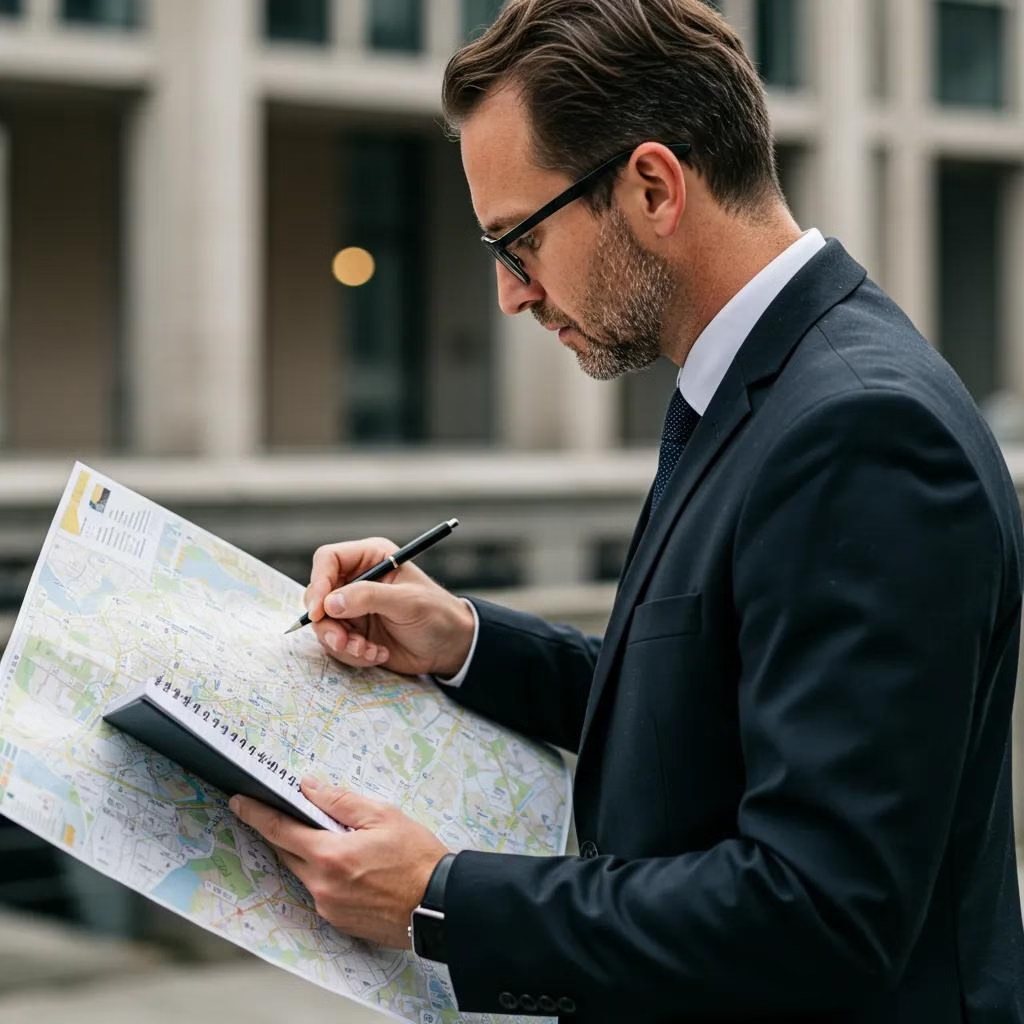
Engaging a qualified investigator elevates search precision through specialist databases, field enquiries, and proven methodologies.
What Are the Benefits of Using Professional People Tracing Services?
Professional tracing services improve outcomes by:
- Accessing exclusive credit-reference and telecoms databases
- Deploying accredited OSINT tools and surveillance protocols
- Maintaining strict confidentiality under industry-standard ethics
These advantages translate into higher success rates and stronger evidence chains for legal or financial proceedings.
How Do Private Investigators Find People?
Investigators apply a multi-stage process:
- Database Cross-Check – Matching names across public and proprietary records
- OSINT Analysis – Mining social media, forums, and deep-web sources
- Field Reconnaissance – Conducting discreet enquiries at last known addresses
- Stakeholder Interviews – Speaking with neighbours, colleagues, or family contacts
Blending digital and field tactics ensures robust trace results when online records alone fall short.
What Types of People Can Professionals Trace?
Experts typically locate:
- Missing persons or long-lost relatives
- Debtors and bankruptcy respondents
- Probate beneficiaries or will executors
- Witnesses or parties to civil and criminal matters
Tailored strategies for each category optimise speed, discretion, and legal compliance in the tracing process.
What Are the Key Legal and Ethical Considerations in People Tracing?
Operating within UK law and professional ethics is essential to protect privacy and uphold service integrity.
How Does GDPR Affect People Tracing in the UK?
GDPR governs personal data processing by requiring:
- Lawful basis (legitimate interest or consent)
- Transparency through privacy notices
- Secure storage and restricted access
- Right to rectification or erasure upon request
Complying with these rules strengthens public confidence and prevents regulatory penalties.
What Are the UK Laws Governing Private Investigators?
Legal and Ethical Framework for People Tracing in the UK
Private investigators in the UK must operate within strict legal boundaries, including the Data Protection Act 2018, UK GDPR, Human Rights Act 1998, and the Protection from Harassment Act 1997. They do not possess special legal powers and must ensure their activities, such as surveillance and data collection, are proportionate and do not infringe on privacy. The Information Commissioner’s Office (ICO) also emphasizes that tracing agents must justify any impact on individuals and adhere to safeguarding policies.
This research directly supports the article's sections on the legality of people tracing, GDPR, and UK laws governing private investigators, highlighting the importance of ethical and compliant practices.
How Do Professional Agencies Ensure Confidentiality and Compliance?
Reputable agencies implement:
- Encrypted data transmissions and secure file storage
- Staff accreditation and ongoing training on legal updates
- Clear internal protocols for consent management
Such measures protect client interests while upholding ethical investigation standards.
How to Choose the Right People Tracing Service in the UK?
Selecting a provider requires balancing experience, transparency, and cost to match your case’s complexity.
What Factors Affect Success Rates and Reliability?
Key indicators of a dependable provider include:
- Documented track record (success percentages, case studies)
- Access to diversified data sources (credit, telecoms, public records)
- Robust confidentiality policies and professional accreditation
Prioritising these factors delivers higher confidence in trace outcomes.
How Much Do Private Investigators Charge for People Tracing?
What Should You Expect When Hiring a Tracing Agent?
A professional engagement typically follows these steps:
- Initial Consultation – Case review and confirmation of lawful basis
- Proposal & Agreement – Defining scope, fees, and timeframes
- Investigation Phase – Data gathering, analysis, and fieldwork
- Reporting & Follow-Up – Delivering validated contact details and next-step recommendations
Clear communication at each stage reinforces trust and sets realistic timelines for results.
What Advanced Tools and Techniques Are Used for Effective People Tracing?
Leading-edge investigations blend multiple data streams and analytic methods to uncover hidden leads.
How Is Open-Source Intelligence (OSINT) Used in Tracing?
OSINT empowers investigators to:
- Harvest public forum posts, archived web pages, and domain WHOIS records
- Employ reverse-image and link-analysis tools to map social networks
- Validate profiles against multiple public and proprietary datasets
OSINT techniques enhance the depth of digital footprints, revealing connections that static records alone cannot provide.
The Role of Open-Source Intelligence (OSINT) in Modern Tracing
Open-source intelligence (OSINT) has transformed people tracing by providing access to a wide range of digital information from public sources like news archives, court documents, and social media. Investigators use OSINT techniques, including reverse image searches and link analysis, to uncover recent activity and personal networks, especially when traditional online searches are insufficient. Ethical OSINT investigations require permission from relevant authorities and adherence to legal and ethical responsibilities.
This supports the article's discussion on advanced tools and techniques, specifically the role of OSINT in modern people tracing investigations.
What Role Do Credit Reference Agencies Play?
Credit reference agencies contribute:
- Verified address histories and previous residences
- Bankruptcy, insolvency, and financial conduct register entries
- Identity verification against sanctioned lists
Integration of credit-reference data accelerates tracing by cross-validating name–address pairs with high reliability.
How Are Public Records Integrated into Tracing Methods?
Investigators link public-domain documents—such as land registry, probate filings, and court judgments—with personal data to:
- Confirm identity through property ownership
- Identify next of kin in probate records
- Cross-reference judgment enforcement notices
Combining public records with OSINT and credit data forms a comprehensive evidence base for every trace.
What Are Common Challenges and How to Overcome Them in People Tracing?
Complex cases often hinge on incomplete data, legal restrictions, or ethical dilemmas—but each can be addressed with the right approach.
How to Handle Incomplete or Outdated Information?
When records lack currency:
- Verify historical addresses against utility and council tax records
- Cross-check multiple data sources to confirm identity matches
- Conduct discreet field enquiries or telephone outreach to update details
Systematic verification restores data integrity and advances the trace.
What Are the Risks of Illegal or Unethical Tracing?
Unlawful practices—such as unauthorised surveillance or data misuse—can lead to:
- Civil litigation for breach of privacy
- Criminal charges under RIPA or data-protection laws
- Irreparable reputation damage for individuals and agencies
Strict adherence to legal frameworks mitigates these risks and preserves professional credibility.
When Is It Best to Escalate to Professional Help?
Escalation is advised when:
- DIY searches yield no leads after exhaustive public-record checks
- The case involves sensitive legal disputes or welfare concerns
- Confidentiality and rapid resolution are paramount
Engaging a specialised investigator ensures both efficiency and compliance in the most challenging traces.
Reuniting families, recovering assets, or supporting legal cases all depend on accurate, compliant tracing. By combining free public-record tactics with professional expertise, you can optimise success while respecting privacy. When a DIY approach stalls, reputable agencies like Blue Moon Investigations stand ready to enhance your search with advanced resources, offering confidentiality and a proven track record.
Contact Blue Moon Investigations today for a discreet discussion about your people tracing needs and discover how expert strategies can deliver the clarity and results you require.

Trustworthy and Affordable Process Server Solutions Today

Cost-Effective Process Server Solutions for Seamless Legal Document Delivery Across the UK
Smooth court proceedings rely on legally sound document delivery, but escalating expenses and procedural missteps can jeopardise cases. Our affordable process server solutions from Bluemoon Investigations combine straightforward fixed fees with expert adherence to the Civil Procedure Rules (CPR), streamlining document delivery, cutting down delays, and safeguarding your claims. This guide details the role of process servers, UK legal service regulations, pricing structures, the range of documents handled, national and international coverage, and the compelling reasons to use a professional service. Understanding these key aspects will help you secure dependable service without any unexpected costs.
Request a Quote Call Us: 0800 086 2270
Secure Your Legal Documents with Expert Process Servers
Ensure compliant, timely, and cost-effective document delivery across the UK. Get a transparent quote today.
What Exactly Do Process Server Services Entail and Why Are They Crucial in the UK?
Process server services refer to the specialised task of delivering court and legal documents to parties involved in civil litigation, ensuring these documents reach their intended recipients strictly according to UK law. This process is vital to prevent invalid service, which can lead to cases being thrown out and wasted court resources. For instance, serving a claim form under CPR Part 6 officially notifies the recipient and formally commences legal action.
Civil Procedure Rules, Part 6 (Various Editions)
[The Vital Role of Process Servers in Legal Proceedings]
Process servers are indispensable within the UK's legal framework for the delivery of court documents, guaranteeing that all parties receive proper notification of legal actions, which is fundamental for the validity of legal proceedings. This practice is strictly governed by the Civil Procedure Rules (CPR), which specify the approved methods and requirements for serving documents to ensure legal compliance and avert case dismissals due to improper service.
Our experienced process servers combine legal compliance with promptness by:
- Employing recognised delivery methods to meet all court stipulations
- Meticulously documenting every service attempt with affidavits or certificates of service
- Expertly managing complex service requirements, such as substituted service or personal delivery
These essential safeguards ensure the enforceability of civil claims and set the stage for a clear understanding of roles, which we'll explore further in the next section on who performs these crucial services.
Who Is a Process Server and What Are Their Responsibilities?
A process server is a professionally trained individual, often with a background in law enforcement or as a licensed investigator, whose primary duty is to deliver legal documents to individuals or organisations. They carry out specific instructions, such as personal service, where documents are handed directly to the recipient, or substituted service when direct delivery proves impossible. Their role is to ensure that recipients cannot plausibly claim ignorance of legal proceedings, thereby establishing an irrefutable chain of service.
How Do Process Servers Guarantee Legal Compliance with UK Legislation?
Process servers meticulously follow the Civil Procedure Rules by adhering to prescribed service methods, observing strict timeframes, and preparing sworn statements as proof of delivery. They meticulously record the date, time, location, and recipient's details in a Statement of Service or Affidavit of Service. This formal record is then attached to court filings, demonstrating that due process has been followed and minimising the risk of challenges or appeals based on inadequate service.
What Kinds of Legal Documents Can Process Servers Handle?

A broad range of court and statutory documents fall under the remit of process serving. The table below categorises the main types of documents, their specific purposes, and their typical applications.
These fundamental services extend to specialised options like recipient tracing and expedited delivery, which we will discuss further within our pricing information.
What Are the Typical Costs for Process Server Services in the UK?
Our transparent, fixed-fee pricing structure ensures you know exactly what to expect, making our services affordable. Fees are determined by factors such as the urgency of the service, the geographical location, and the complexity involved. A clear breakdown of our standard and expedited service tiers helps clients budget effectively and secure prompt results.
What Are the Standard Fees for Process Serving, Both Standard and Urgent?
The following table provides an indication of our starting fees, inclusive of VAT, for common service levels.
This tiered pricing model allows clients to select the most suitable balance between cost and speed, which leads us to consider potential additional charges.
Are There Any Hidden Charges to Be Aware of When Engaging a Process Server?
Reputable and transparent providers avoid unexpected additional charges. However, it's always advisable to confirm whether travel beyond central areas, multiple service attempts, or extensive investigative work might incur extra fees. A clearly defined service agreement helps prevent misunderstandings and reinforces trust in the process server's professionalism, highlighting the advantages of our fixed-fee approach.
How Does Fixed-Fee Pricing Benefit Clients Seeking Value for Money?

Our fixed-fee pricing structure offers significant advantages, promoting cost certainty, encouraging prompt instructions, and fostering efficient service delivery. Clients benefit from:
- Budget-friendly financial planning without the uncertainty of hourly rates
- Billing clarity, with no surprise charges for additional service attempts
- Simplified invoicing processes, ideal for legal accounting purposes
The Law Society, "Guidance on Pricing and Costs" (2024)
[The Advantages of Fixed-Fee Pricing in Legal Services]
Fixed-fee pricing models within the legal sector, including process serving, provide clients with enhanced cost certainty and predictability. This approach facilitates more effective budgeting and financial planning, as clients are fully aware of the service cost upfront, thereby eliminating unexpected expenses. This level of transparency can also encourage clients to issue instructions promptly and streamline the overall workflow.
This commitment to value naturally extends to the comprehensive range of services we offer throughout the UK.
What Types of Legal Document Delivery Services Are Available Across the UK?
Process servers operating in the UK handle a diverse array of legal documents, ranging from family law correspondence to crucial business notices. Our services are tailored to comply with regional regulations and local court procedures, ensuring consistent quality of delivery nationwide and internationally.
How Are Divorce Papers and Statutory Demands Served Efficiently?
Serving divorce petitions requires meticulous personal delivery or adherence to methods approved by the court, often coupled with confirmation of receipt. Statutory demands necessitate precise delivery within strict insolvency timeframes, utilising same-day or next-day services to protect your legal rights.
What Is Involved in Serving Injunctions, Child Arrangement Orders, and Eviction Notices?
The process of serving injunctions and child arrangement orders involves close coordination with court-stipulated deadlines. Similarly, eviction notices, governed by housing legislation, must respect legally mandated notice periods. Each document type requires specific procedural steps and proof of service to validate its enforceability.
How Do Tracing Services Aid in Successful Document Delivery?
When a recipient cannot be located at their last known address, our tracing services combine thorough data research with on-the-ground inquiries to confirm their current whereabouts. This investigative support significantly increases the likelihood of successful service and prevents delays in critical legal actions.
How Does Nationwide and International Process Serving Operate for UK Clients?
Professional process servers utilise a network of local agents across the UK and manage international instructions through established treaties and alternative service methods. This dual approach ensures consistent service standards, whether the delivery is domestic or crosses international borders.
What UK Regions Are Covered by Professional Process Servers?
Bluemoon Investigations provides comprehensive coverage across all counties in England and Wales, as well as major cities such as London, Manchester, Birmingham, and Glasgow. Our extensive regional networks ensure we have local expertise and can offer rapid response times throughout the United Kingdom.
How Is International Process Serving Managed Under the Hague Convention?
Under the Hague Service Convention, process servers submit documents via designated central authorities, ensuring formal recognition and adherence to international legal standards. This structured process typically results in service completion within 30–60 days, depending on the specific protocols of the destination country.
What Are the Options for Serving Documents in Countries Not Covered by the Hague Convention?
For jurisdictions that are not signatories to the Convention, alternative methods include utilising diplomatic channels, direct service via airmail, or initiating filings with local courts. Our expert process servers will advise on the most efficient and compliant method available, safeguarding your cross-border claims even in the absence of treaty agreements.
Why Should You Choose a Professional Process Server for Cost-Effective and Efficient Service?
Engaging a qualified process server guarantees legal accuracy, adherence to reliable timelines, and documented proof of service, all within a predictable and affordable budget. Professional providers minimise the risks associated with invalid service and protect your claim from potential procedural challenges.
What Qualifications and Experience Do Professional Process Servers Possess?
Experienced process servers often bring valuable backgrounds from policing, private investigation, or legal administration. They typically hold professional accreditations, maintain appropriate insurance coverage, and operate in accordance with established codes of practice set by recognised investigator associations.
How Do Process Servers Provide Proof of Service and Ensure Data Protection?
Following each delivery, process servers prepare a signed Statement of Service or Affidavit of Service, detailing the date, time, recipient's information, and the method used. All personal data is handled in strict compliance with GDPR and ICO regulations to ensure complete confidentiality and security.
What Are the Advantages of Selecting a Reliable Process Server for Your Legal Requirements?
A trustworthy process server provides invaluable peace of mind through:
- Meticulously documented service records that comply with court requirements
- Transparent, fixed-fee billing with no hidden charges
- Comprehensive nationwide and international capabilities managed by a single provider
- Dedicated client support and real-time updates on service progress
By utilising professional expertise in process serving, you ensure your legal documents are delivered correctly, punctually, and within your budget.
Our Unwavering Commitment to Professional Standards and Client Trust
At Bluemoon Investigations, our dedication to excellence extends beyond mere document delivery. We are committed to upholding the highest professional standards, ensuring every client receives a service built on integrity, expertise, and unwavering reliability. Our authority in the field is not just claimed, but demonstrated through rigorous adherence to best practices and continuous professional development.
Accreditations and Industry Affiliations
Our team comprises seasoned professionals who are often members of leading industry bodies, reflecting our commitment to ethical conduct and professional excellence. We operate in accordance with the codes of conduct set by recognised associations, ensuring our practices are always aligned with the latest industry benchmarks and legal requirements.
- Adherence to the Civil Procedure Rules (CPR)
- Compliance with data protection regulations (GDPR, ICO)
- Commitment to ethical investigation and service delivery
Continuous Professional Development
The legal landscape is constantly evolving, and so are our skills. Our process servers regularly engage in professional development and training to stay abreast of changes in legislation, court procedures, and best practices in document service. This proactive approach ensures that our methods are always current, compliant, and effective, providing you with peace of mind.
Ethical Practice and Data Security
Client confidentiality and data security are paramount. We handle all sensitive information with the utmost discretion, employing robust security protocols that comply with GDPR and ICO regulations. Our ethical framework ensures that every action taken is transparent, justifiable, and in the best interest of our clients and the legal process.
Choosing Bluemoon Investigations means partnering with a provider whose authority is underpinned by a deep commitment to professional standards, continuous improvement, and absolute client trust. We don't just serve documents; we serve justice with integrity.
Choosing Bluemoon Investigations means securing affordable process server solutions that meet UK legal standards and shield your case from costly delays. Request a Quote today and experience efficient, compliant document delivery you can rely on.
Ready to Secure Your Legal Documents?
Don't let procedural missteps jeopardise your case. Contact Bluemoon Investigations today for reliable, compliant, and cost-effective process serving solutions across the UK.
Request a Quote Call Us: 0800 086 2270