
Process Server West Midlands
All enquiries handled in complete confidence.
Your Trusted West Midlands Process Servers
Process Serving in the West Midlands area for over 40 years

Trusted Process Servers in the West Midlands
- Fast, CPR-compliant process serving across the West Midlands
- Documents served: statutory demands, injunctions, divorce petitions, witness summons
- Handled with precision, discretion, and full legal compliance
- Up to three delivery attempts included
- Proof of service supplied for your records
Call our West Midlands Process Serving Office today on 0121 270 8419 or email us at process@bluemooninvestigations.co.uk
CPR-Compliant Service
Our experienced process servers deliver documents strictly in line with Civil Procedure Rules. From court papers to statutory demands, we ensure every instruction is handled with precision and legal accuracy.
Nationwide Coverage
With trusted process servers across the UK, we handle instructions quickly and efficiently, wherever service is required. Local knowledge combined with national reach ensures timely delivery in any jurisdiction.
Confidential & Discreet
We handle every instruction with complete confidentiality and discretion. Sensitive information is protected, and all cases are managed with the highest professional standards.
Timely & Reliable
Deadlines matter in legal proceedings. Our team is committed to prompt service, with attempts made within agreed timescales and full proof provided, giving you confidence your case stays on track.
Select the process serving option that best meets your case requirements — each delivered with full legal compliance and professional care.
Fixed-Fee, CPR-Compliant Service
Basic Process Serve
Fixed Fee – No Hidden Costs
One Service Attempt Included
Ideal for Non-Urgent Matters
First Attempt Within 7 Days
CPR-Compliant Procedure
Proof of Service Provided
Printing Up to 25 Pages Included
Prices from £110
Fixed-Fee Service with Full Updates
Standard Process Serve
Fixed Fee – No Hidden Costs
Up to 3 Service Attempts Included
First Attempt Made Within 24–48 Hours
CPR-Compliant Procedure
Proof of Service Provided
Live Updates After Every Attempt
Printing Up to 50 Pages Included
Prices from £165
Fixed-Fee Urgent Service – First Attempt Within 24 Hours
Priority Process Serve
Fixed Fee – Clear and Upfront Pricing
Prompt Allocation to Nearest Server
First Attempt Made Within Hours
CPR-Compliant Procedure
Proof of Service Provided
Live Updates After Every Attempt
Printing Included Up to 50 Pages
Prices from £195
What is Process Serving in the West Midlands?
Process serving in the West Midlands is the formal delivery of legal documents, carried out in line with the Civil Procedure Rules (CPR). Our experienced West Midlands process servers act for solicitors, businesses, private clients, and the courts, ensuring documents are served correctly and proof of service is provided. Where recipients are evasive, we use tracing methods or apply for substituted service to complete delivery in full compliance with the rules.
How Our West Midlands Process Serving Works
Standard Procedure
- Receipt & Confirmation – As soon as we receive your documents, we email you confirmation of safe receipt.
- Case Management – All details are securely logged in our client management system, with digital copies created where needed.
- Assignment – Your instruction is allocated to our nearest available West Midlands process server for speed and efficiency.
- First Attempt – We aim to carry out the first visit within 24 hours, if using our Standard Service.
- Multiple Visits – If service cannot be completed immediately, up to three attempts are made at varied times of day.
- Client Updates – You receive real-time progress reports throughout the process.
- Further Instructions – Any issues are referred back to you promptly for guidance.
- No Unauthorised Costs – We never incur additional expenses without your prior consent.
What Happens Next
- Successful Service – Once good service is achieved, we prepare all required paperwork (including swearing, if necessary). Hard copies can be posted, or digital copies supplied for speed.
- Unsuccessful Attempts – If service cannot be achieved, our process server prepares a detailed witness statement with supporting evidence of attempts, assisting any application for substituted service.
Our Quality Assurance for Process Serving in the West Midlands
At Bluemoon Investigations, we are committed to providing a reliable, transparent, and CPR-compliant process serving service across the West Midlands.
Our Promises:
- Full CPR Compliance – every serve is carried out in line with Civil Procedure Rules.
- Prompt Action – first attempts made quickly, with most serves completed within 48 hours.
- Fixed Fees – clear, upfront pricing with no hidden costs.
- Proof of Service – digital certificates supplied, hard copies available on request.
- Real-Time Updates – progress reports after every attempt.
- Priority Service Available – urgent instructions actioned within hours where required.
Ajay Singh
“Bluemoon served urgent legal documents on our behalf quickly and discreetly. Their updates throughout the process gave us complete confidence.”
Samuel Ogindae
“We needed a statutory demand served on short notice. Jason handled it professionally, with sworn proof of service provided without delay.”
James Askwith
“Our firm uses Bluemoon regularly for process serving. They are reliable, compliant with the rules, and always deliver affidavits on time.”
Prefer to Speak to Someone First?
No forms, no waiting — just straightforward help from an experienced West Midlands process server. Call our West Midlands office on 0121 270 8419 or email process@bluemooninvestigations.co.uk and we’ll respond promptly to guide you through your next steps.
Process Serving in the West Midlands, but with Compassion
The role of a process server in the West Midlands often involves delivering difficult news—something people may not want to receive. We understand that serving legal documents can sometimes provoke strong emotions and, in rare cases, even lead to confrontation.
Our approach is always to serve with professionalism and compassion. At the same time, every one of our agents is trained to recognise when a firmer stance is needed to ensure the papers are served correctly and without delay.
With extensive experience and specialist training, our West Midlands process servers are equipped to handle all situations calmly and effectively, ensuring the task is completed with dignity, discretion, and professionalism.
Morris McNulty
“An evasive respondent made service difficult, but Bluemoon’s persistence and detailed witness statement supported our application for substituted service.”
Susanne Leftwich
“The process server kept us informed at every stage and ensured the papers were served within the required timescales. Excellent service.”
Greta Arben
“Bluemoon’s process serving is thorough and efficient. Three visits were made as standard, and the final proof was court-ready.”
Local Process Serving Offices in the West Midlands
- Process Server Birmingham City Centre – including Colmore Row, Jewellery Quarter, Brindleyplace, Digbeth, and Eastside.
- Process Server Coventry – including Earlsdon, Canley, Tile Hill, and Stoke.
- Process Server Wolverhampton – including Tettenhall, Bilston, and Wednesfield.
- Process Server Solihull – including Shirley, Knowle, Dorridge, and Olton.
- Process Server Walsall – including Aldridge, Bloxwich, and Willenhall.
- Process Server Dudley – including Stourbridge, Halesowen, and Brierley Hill.
- Process Server West Bromwich (Sandwell) – including Smethwick, Tipton, and Oldbury.
- Process Server Sutton Coldfield – including Four Oaks, Mere Green, and Wylde Green.
- Process Server Redditch – including Webheath, Church Hill, and Headless Cross.
- Process Server Bromsgrove – including Aston Fields, Catshill, and Stoke Prior.
Useful Resources for Process Serving in the West Midlands
Understanding the legal and compliance framework around process serving is essential. These trusted resources provide guidance and context:
- UK Government – Civil Procedure Rules (Part 6: Service of Documents)
- HM Courts & Tribunals Service
- Citizens Advice – Legal System Overview
- Law Society – Find a Solicitor
- GOV.UK – Court and Tribunal Forms (including N215 Statement of Service)
Regional Process Serving Hubs
Process Server Birmingham ·
Process Server Manchester ·
Process Server Nottingham ·
Process Server Leeds ·
Process Server Liverpool
Other Services in the West Midlands
In addition to professional process serving, Bluemoon Investigations provides a full range of investigative services across the West Midlands.
- Private Investigation Services in the West Midlands
- People Tracing in West Midlands
- Surveillance Services
- Background Checks
Wherever you are based in the West Midlands or the surrounding towns, our team delivers fast, discreet, and compliant investigative solutions.
Process Server West Midlands: Expert Legal Document Delivery and Court Paper Serving

A process server delivers legal documents to the named recipient in a legally recognised way, ensuring court proceedings can progress. This article explains what Bluemoon Investigations, as a process server, does across the West Midlands, how evidence of service is produced to meet court requirements, and practical options for urgent or sensitive cases. You’ll learn operational steps, the types of documents commonly served, city-level service notes for Birmingham, Wolverhampton, Coventry, Walsall and Solihull, and transparent pricing and proof formats to reduce uncertainty. The guide also covers compliance with the Civil Procedure Rules and data protection requirements, plus sensible choices for fixed-fee or urgent instructions. Finally, we map the step-by-step process to instruct us and show what proof you’ll receive, with practical checklists to prepare paperwork and manage costs efficiently. Throughout, we use target phrases such as process server West Midlands, proof of service West Midlands and urgent process server West Midlands to help you quickly find the local support you need.
What Is a Process Server and How Do They Operate in West Midlands?
A process server is a legal support professional who delivers court papers, notices and orders to individuals or businesses, following rules that make service admissible in court. They operate by identifying the recipient, attempting personal service under prescribed procedures, and creating court-ready proof such as a statement of service or affidavit; this method ensures legal effectiveness and reduces delays in proceedings. Local operation in the West Midlands involves knowledge of area courts, typical travel times, and privacy-sensitive techniques to protect client confidentiality and case integrity. Understanding our role and practical steps helps you choose the right urgency tier and evidence package. The next subsection breaks down the typical actions undertaken during a service attempt.
What Does Process Serving Involve in Legal Document Delivery?
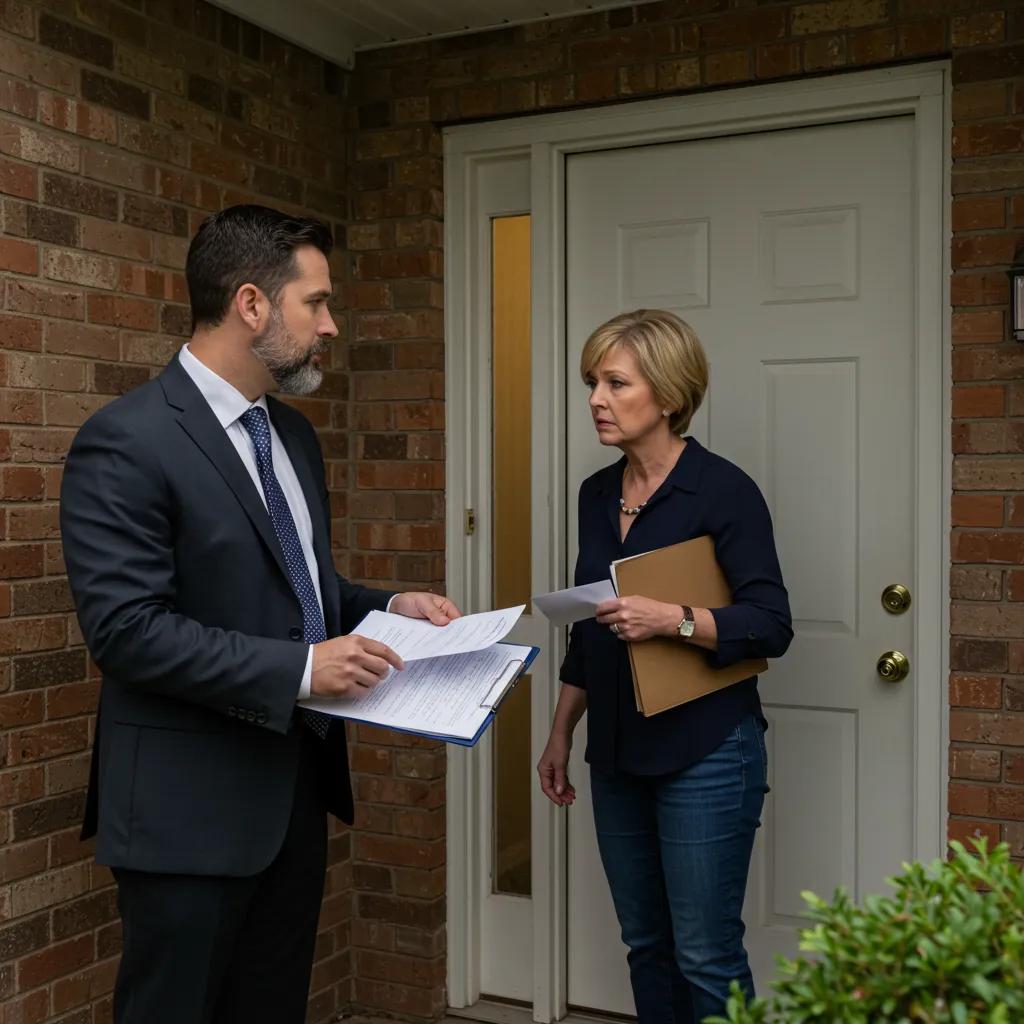
Process serving involves a sequence of actions: verify recipient identity, attempt hand-delivery at a known address, record attempts, and collect evidence that the service occurred or why it could not be completed. Evidence commonly produced includes a signed statement of service, photographic records, a service attempt log with timestamps and GPS notes, and where required an affidavit suitable for court. This operational record aligns with the Civil Procedure Rules and supports enforcement or case progression, reducing the risk that service will be challenged. Clear documentation also assists solicitors preparing case bundles and ensures a transparent chain of events. The following section lists the document types typically served across the region.
These actions lead naturally to the question: which documents can we serve in the West Midlands, and what special handling might they require?
Which Legal Documents Can Be Served in West Midlands?
Process servers can serve a broad range of legal documents including claim forms, divorce petitions, statutory demands, injunctions and possession notices, each with distinct formality needs. Some documents—such as non-molestation orders or statutory demands—often require urgent or carefully documented service and may attract priority handling to protect rights or avoid prejudice. For family law documents, discretion and sensitivity are paramount; for commercial claims, reliable proof and prompt delivery matter most to preserve enforcement options. Knowing the document type in advance helps us determine attempts included, evidence formats provided and whether tracing or priority options are advisable for your case. The following subsection explains how compliance and confidentiality are maintained during these operations.
How Does Bluemoon Investigations Ensure Compliance and Confidentiality?

Bluemoon Investigations follows practices designed to produce court-ready evidence while protecting personal data and client confidentiality, aligning operational methods with the Civil Procedure Rules and data protection principles. Compliance measures include detailed time-stamped visit notes, photographic evidence where appropriate, and anonymised reporting practices that limit exposure of sensitive information while preserving legal utility. Discreet attendance techniques and secure handling of case files reduce the risk of unintended disclosure, which is particularly important for family law or sensitive commercial matters. These practices deliver both compliance and client confidence, maintaining the documentary standards courts expect. The next section explains why these attributes matter when choosing a local provider in the West Midlands.
Why Choose Bluemoon Investigations as Your Local Process Server in West Midlands?
A trusted local process server combines regional knowledge, discreet operational methods and court-ready evidence to speed case progress and reduce avoidable adjournments. Bluemoon Investigations is your experienced adviser and provider in this field, offering confidentiality, compliance-focused operations, clear proof of service and rapid turnaround options for time-sensitive matters. Selecting a provider with local court familiarity and a structured approach to evidence helps prevent challenges to service and supports enforcement or hearings without unnecessary delay. Below we outline how established experience, speed and specific guarantees translate into practical benefits for clients in the West Midlands.
How Does 40+ Years of Experience Benefit Clients in West Midlands?
Extensive experience brings familiarity with local court practices, typical resident behaviours and effective attempt strategies that increase successful service rates for both routine and complex instructions. Practitioners with long regional exposure can anticipate practical barriers—such as access issues or known high-occupancy addresses—and adapt tactics like timed attempts and coordinated multi-location checks. This reduces wasted attempts and supports solicitors by producing clear, court-acceptable statements of service. Experienced teams also understand how to prioritise sensitive family law or business-critical documents to meet pressing deadlines and legal requirements. The next subsection covers how fast yet discreet service is delivered in practice.
What Are the Advantages of Our Fast and Discreet Process Serving?
Fast and discreet process serving balances rapid turnaround with operational discretion to protect client interests and minimise publicity or confrontation at service locations. Priority options enable same-day or next-day attention in urgent matters, with plain—clothes attendance, unmarked vehicles and minimal onsite visibility to preserve confidentiality. Swift service reduces the risk of respondents avoiding service and helps courts maintain timetables; discreet methods protect vulnerable parties and sensitive family law cases. Choosing an appropriate speed tier depends on your document type and legal risk, which we discuss in the pricing section to help you select the best option. The following subsection explains the people-tracing guarantee and when it applies.
What Is the “No Trace, No Fee” Guarantee for People Tracing?
Our “no trace, no fee” guarantee means we conduct people tracing efforts to locate a hard-to-find recipient and only charge the tracing fee if the trace yields a viable address for service. People tracing uses public and proprietary data sources, field enquiries and local knowledge to produce serviceable contact information; when tracing succeeds it often converts into an effective service attempt. This approach reduces your risk when addresses are outdated or incomplete and can be particularly useful for debt recovery or contested family law matters. Guarantees typically include conditions and exclusions, so clear pre-instruction discussion clarifies scope and next steps for complex tracing assignments. The next H2 outlines the geographic coverage across the West Midlands.
Which Areas in West Midlands Do We Serve for Process Serving?
Coverage across the West Midlands includes major urban centres and surrounding boroughs, enabling timely attendance at local courts and effective local tracing where needed. Knowing which cities we serve and typical response times helps you choose the right urgency tier and set realistic expectations for service completion. Local footprints often influence travel times, attempt scheduling and evidence collection methods that vary between dense urban streets and suburban addresses. The following H3s give practical notes for Birmingham, Wolverhampton, Coventry, Walsall and Solihull to assist solicitors and private clients planning instructions.
What Process Serving Services Are Available in Birmingham?
Birmingham assignments commonly involve high-volume residential addresses, family law documents and urgent commercial claims requiring same-day or priority attendance during court weeks. Our local knowledge of magistrates’ and county court procedures, common residential blocks and typical peak times for successful contact improves outcomes for both personal and commercial serving. Priority packages are often recommended when court deadlines or enforcement timetables are tight, while standard options suit routine instructions with a reasonable timeframe. Details on pricing tiers and included evidence packages appear in the pricing section to help decide the right level of service for Birmingham cases.
Birmingham’s profile leads naturally into how our services adapt for Wolverhampton and Coventry.
How Do We Serve Court Papers in Wolverhampton and Coventry?
In Wolverhampton and Coventry, efficient service relies on coordinating attempts around local access routes, scheduled business hours and known court timetables to align service with case progression. We factor in local traffic patterns and court listing days to optimise same-day or next-day priority windows, and we brief clients on likely turnaround ranges to manage expectations. Collaboration with instructing solicitors ensures delivery of court-ready evidence in the format required for local hearings. The next subsection summarises typical arrangements for Walsall and Solihull.
What Services Are Offered in Walsall and Solihull?
Walsall and Solihull assignments often include debt recovery documents, family law notifications and possession claims where access can vary between suburban streets and rural addresses. We tailor attempt strategies—such as staggered timings or weekend checks—when addresses are difficult or occupants may be absent during standard hours. Combining people tracing with targeted attempt windows increases the chance of successful service without excessive additional charges. Understanding common case types and access challenges in these boroughs helps clients choose appropriate service tiers and evidence options.
How Much Does a Process Server Cost in West Midlands?
Cost depends on service tier, urgency, location and whether tracing or additional attempts are required; our transparent pricing helps you budget and choose the right option. Typical fixed-fee tiers are standard, priority and same-day, each specifying included attempts, evidence delivered and expected turnaround times. Additional variables—such as multiple attempts, complex access or specialist tracing—may attract extra charges; clear pre-instruction disclosure minimises surprise costs. The EAV table below compares common service options, their attributes and indicative price ranges to aid decision-making.
Introductory table summarising fixed-fee options and what they include.
| Service Option | Attribute (Turnaround / Attempts Included) | Price or Price Range |
|---|---|---|
| Standard Service | 3–5 working days / Usually 1–2 attempts | £165 |
| Priority Service | 24–48 hours / 2–3 attempts | £195 |
| Same-Day Service | Same business day subject to instruction time / 1–3 attempts | £195 – £295 |
What Are the Fixed Fee Options for Standard and Urgent Services?
Fixed-fee packages present a clear scope of work: the standard tier covers routine service with a modest number of attempts and basic evidence; the priority tier reduces turnaround and increases attempts; same-day covers immediate urgency with premium pricing. Each fixed fee typically includes a statement of service and photographic evidence when applicable, while higher tiers may add GPS timestamps and additional callout attempts. Your choice of tier should be guided by document type, court deadlines and the likelihood the recipient will evade service. Transparent selection helps minimise follow-up costs and supports successful case progression.
How Does Urgent Process Serving Work and What Are the Costs?
Urgent process serving operates on condensed timelines with prioritised scheduling, dedicated attendance windows and immediate evidence collation to meet court or enforcement deadlines. Same-day instructions often require early notice and may be subject to logistic cut-offs; premium fees reflect rapid mobilisation and prioritised field resources. Urgent service is recommended for time-sensitive documents such as injunctions or imminent hearing notices where delay could cause irreparable procedural harm. We recommend discussing cut-off times and realistic coverage for same-day requests when seeking a quote to ensure expectations match our operational capacity.
Are There Additional Charges for Multiple Attempts or Complex Cases?
Additional charges commonly apply for repeated attempts beyond the package allowance, specialist tracing, out-of-area travel or difficult-access addresses requiring extended fieldwork. Examples include additional per-attempt fees, tracing fees if advanced searches are required, and surcharges for complex multi-location cases. You can minimise extra costs by providing up-to-date recipient details, alternative contact information and any known availability windows at instruction time. Clear pre-instruction briefing and documented instructions reduce the likelihood of surprise charges and keep overall costs predictable.
What Is the Step-by-Step Process for Serving Legal Documents in West Midlands?
Our clear, numbered process map helps you know what information to prepare and what to expect from us, from instruction to evidence delivery. The sequence below outlines the typical flow: instruct, verify, attempt service, record evidence, deliver proof. Following this structured approach reduces ambiguity, ensures compliance with the Civil Procedure Rules, and supports smooth case progression in court or enforcement stages. The EAV table that follows maps client and provider actions to deliverables to make the workflow explicit.
| Step | Action by Client | Action by Bluemoon | Deliverable / Outcome |
|---|---|---|---|
| 1 | Provide documents and recipient details | Verify instructions, confirm service tier | Instruction acknowledgement and schedule |
| 2 | Supply identification or reference docs | Conduct address checks and tracing if needed | Trace report or verification notes |
| 3 | Authorise service attempt | Perform attendance and attempt service | Statement of service, photos, timestamps |
| 4 | Request affidavit if required | Prepare court-ready affidavit | Affidavit or sworn statement for court use |
How Do You Instruct Bluemoon Investigations for Process Serving?
To instruct Bluemoon Investigations, compile the documents to be served, provide the recipient’s best-known address and any available alternative contacts, and specify the desired urgency tier and evidence requirements. Highlight any confidentiality concerns at instruction so discrete methods are applied where necessary; our team will confirm scope, provide estimated turnaround, and advise on likely costs for tracing or additional attempts. Clear, complete instructions reduce unnecessary attempts and speed delivery of court–ready proof. For case-specific or urgent matters, a discreet discussion is recommended to clarify the best approach and next steps.
What Happens During the Document Delivery and Proof of Service?
During delivery, our process server verifies recipient identity where possible, attempts personal handover, records the attempt with time-stamped notes and photographic evidence if appropriate, and seeks witness statements when relevant. If personal service is not possible, the server documents reasons and any alternative means used—such as leaving documents at a business address or arranging substituted service—always noting compliance with the Civil Procedure Rules. All evidence is compiled into a statement of service or affidavit suitable for court filing, reducing the chance of procedural challenge. The subsequent subsection explains how proof is formatted and why each format matters.
How Is Proof of Service Provided and Why Is It Important?
Proof of service is supplied as a formal statement of service and, where necessary, a sworn affidavit with supporting photos and visit logs; these documents substantiate that the recipient received or was offered the documents. The format and content are important because courts rely on properly executed affidavits and statements to accept that service was valid under procedural rules. Timely delivery of proof to instructing solicitors ensures hearings and enforcement steps proceed without administrative delay. We recommend you request the evidence format you need at instruction to ensure documents integrate smoothly into your case bundles.
Which Types of Legal Documents Are Commonly Served in West Midlands?
Process servers handle a wide variety of document categories that each carry distinct legal formality and urgency requirements, including family law papers, debt recovery claims, injunctions and commercial litigation documents. Correct classification of the document type determines appropriate attempt strategy, evidence package and whether tracing or priority handling is recommended. Understanding the typical requirements for each category reduces the risk of invalid or defective service, which can delay proceedings. The table below summarises core document types, key requirements and the evidence commonly provided.
| Document Type | Typical Requirements | Evidence Provided (proof of service) |
|---|---|---|
| Divorce petition / family papers | Sensitivity, discretion, possible urgency | Statement of service, photos, confidentiality notes |
| Statutory demand / debt claims | Formal delivery, prompt attention | Statement of service, timestamped visit log |
| Injunctions / non-molestation orders | Immediate priority, secure delivery | Signed service statement, affidavit if contested |
| Court orders / civil claims | Court compliance, clear chain of delivery | Affidavit or statement of service, photographic evidence |
How Are Divorce Papers Served in West Midlands?
Divorce papers require a sensitive approach that minimises distress while ensuring court-compliant service; discreet attendance and privacy-aware evidence handling are essential. Service may need priority to meet court timelines and family court expectations, and photographic records are often limited or anonymised to protect parties. Solicitors commonly request clear statements of service and may require affidavits if proof becomes contested; providing full recipient history helps avoid repeated attempts. Our proper handling supports family courts’ requirements while maintaining the dignity and safety of those involved.
What Is Involved in Serving Statutory Demands and Non-Molestation Orders?
Statutory demands and non-molestation orders differ in legal urgency: statutory demands underpin insolvency timelines and usually require prompt, documented delivery, whereas non-molestation orders often require immediate civil protection for vulnerable parties. Both demand precise evidence—timestamped visit logs and possibly sworn affidavits—to demonstrate lawful service and to protect claimants’ rights. Priority service is often advised for these documents to avoid procedural prejudice, and tracing may be necessary when addresses are out of date. Clear pre-instruction direction ensures your chosen service tier matches legal risk.
Can Process Servers Deliver Court Orders for Debt Recovery and Other Cases?
Yes, we play a key role in debt recovery by ensuring judgment notices, statutory demands and enforcement papers reach respondents, often using multi-attempt strategies and people tracing for evasive recipients. Techniques include timed attendance, corroborated witness statements and combining tracing with targeted calls to increase effectiveness. When combined with enforcement action, timely proof of service supports bailiff instructions or further court steps. We recommend considering tracing or priority options where delay would reduce recovery prospects.
Frequently Asked Questions
What qualifications should I look for in a process server?
When selecting a process server, it’s essential to consider their qualifications and experience. Look for professionals who are certified and have a solid understanding of the Civil Procedure Rules. Additionally, our local knowledge of the West Midlands courts and familiarity with the types of documents commonly served can significantly enhance their effectiveness. Client testimonials and reviews can also provide insight into their reliability and professionalism. Ensuring your process server has a proven track record in handling sensitive cases is crucial for maintaining confidentiality and compliance.
How can I ensure my documents are served legally and effectively?
To ensure your documents are served legally and effectively, provide the process server with accurate recipient details and any relevant background information. Specify the urgency of the service and any special handling requirements, especially for sensitive documents. It’s also advisable to discuss the expected proof of service format at the outset. By maintaining clear communication with us and understanding the service options available, you can help facilitate a smooth process that adheres to legal standards and timelines.
What should I do if the recipient is evasive or difficult to locate?
If the recipient is evasive or difficult to locate, consider using a process server that offers people tracing services. These professionals can utilise various resources, including public records and local knowledge, to find the individual. Discussing the situation with us can help us tailor our approach, such as scheduling attempts at different times or using discreet methods. Additionally, providing any known information about the recipient’s habits or potential locations can significantly improve the chances of successful service.
Are there specific rules for serving documents in family law cases?
Yes, serving documents in family law cases often requires additional sensitivity and adherence to specific rules. Courts typically expect that service is conducted discreetly to protect the privacy of the parties involved. It’s crucial to ensure that the recipient is informed without causing unnecessary distress. Additionally, documentation such as statements of service may need to reflect the sensitive nature of the case. Engaging an experienced process server in family law can help you navigate these complexities and ensure compliance with legal requirements.
What happens if the service attempt is unsuccessful?
If a service attempt is unsuccessful, the process server will document the reasons for the failure, which may include the recipient being unavailable or refusing to accept the documents. Depending on the service agreement, the process server may attempt additional service attempts or suggest alternative methods, such as substituted service. It’s important to discuss the next steps with us to determine the best course of action, which may involve adjusting the strategy or considering tracing services to locate the recipient.
How do I prepare my documents for service?
To prepare your documents for service, ensure that they are complete, properly signed, and in the correct format as required by the court. Include any necessary identification or reference documents that may assist the process server. Clearly label the documents and provide any specific instructions regarding the recipient’s address and any known details about their availability. Communicating any confidentiality concerns upfront will also help us handle the documents appropriately.
How Do I Find a Reliable Process Server in West Midlands?
To find a reliable process server, look for clear evidence policies, compliance with civil procedural rules, demonstrable local experience and secure handling of client data; these are the attributes that most influence successful outcomes. Look for transparent pricing, documented proof formats and a willingness to explain tracing and priority options before instruction; such clarity reduces the risk of procedural issues. Verify whether the provider offers anonymised reporting for sensitive matters and whether they can produce affidavits when required. Applying this checklist helps you select a provider that meets your legal and practical needs.
- Evidence policy: Confirm what proof of service will be supplied.
- Compliance track: Ensure adherence to Civil Procedure Rules and data protection.
- Local experience: Prefer teams familiar with West Midlands courts and logistics.
How Long Does Process Serving Usually Take in West Midlands?
Typical timescales vary by tier: standard service often completes within 3–5 working days, priority within 24–48 hours and same-day for accepted urgent instructions, though local conditions and recipient behaviour affect timing. Factors such as inaccurate addresses, multi-occupancy properties and the need for tracing will extend timelines and may require additional attempts. Discussing realistic cut-off times for same-day or priority work with us at instruction helps set expectations and can prevent wasted effort. When deadlines are tight, choosing a higher urgency tier and supplying comprehensive recipient details is the recommended approach.
What Proof Will I Receive After Legal Documents Are Served?
Clients will typically receive a formal statement of service detailing date, time and method of service, supported when relevant by photographic evidence, a visit log with timestamps and, if requested, an affidavit suitable for court filing. Each format serves a different legal purpose: a statement of service records the factual attempt, photographs corroborate presence and condition of delivery, and an affidavit provides sworn testimony when contest or enforcement is anticipated. Request the required proof format at instruction so we can include it within your chosen fee tier. Proper proof reduces the likelihood of contested service or further procedural steps.
Can Process Servers Serve Sensitive or Urgent Legal Papers?
Yes; we handle sensitive or urgent papers using discrete attendance methods, priority scheduling, and secure evidence handling tailored to your case’s confidentiality needs. For urgent injunctions or family law matters, same-day or priority tiers ensure rapid attendance while anonymised reporting and minimal onsite visibility protect clients. When urgency or sensitivity is paramount, immediate contact and clear instruction on required confidentiality measures are essential to align operational tactics with legal objectives. For cases requiring tracing or specialised handling, discuss guarantees and scope with us in advance to ensure appropriate cover and expectations are set.
- Discreet methods: Plain clothes and limited documentation at the scene.
- Priority handling: Same-day or next-day mobilisation for urgent needs.
- Confidential reporting: Anonymised summaries where appropriate for sensitive cases.