
Process Server Swindon
All enquiries handled in complete confidence.
Your Trusted Swindon Process Servers
Process Serving in the Swindon area for over 40 years

Trusted Process Servers in Swindon
- Fast, CPR-compliant process serving across Swindon
- Documents served: statutory demands, injunctions, divorce petitions, witness summons
- Handled with precision, discretion, and full legal compliance
- Up to three delivery attempts included
- Proof of service supplied for your records
Call our Swindon Process Serving Office today on 0800 086 2270 or email us at process@bluemooninvestigations.co.uk
CPR-Compliant Service
Our experienced process servers deliver documents strictly in line with Civil Procedure Rules. From court papers to statutory demands, we ensure every instruction is handled with precision and legal accuracy.
Nationwide Coverage
With trusted process servers across the UK, we handle instructions quickly and efficiently, wherever service is required. Local knowledge combined with national reach ensures timely delivery in any jurisdiction.
Confidential & Discreet
We handle every instruction with complete confidentiality and discretion. Sensitive information is protected, and all cases are managed with the highest professional standards.
Timely & Reliable
Deadlines matter in legal proceedings. Our team is committed to prompt service, with attempts made within agreed timescales and full proof provided, giving you confidence your case stays on track.
Select the process serving option that best meets your case requirements — each delivered with full legal compliance and professional care.
Fixed-Fee, CPR-Compliant Service
Basic Process Serve
Fixed Fee – No Hidden Costs
One Service Attempt Included
Ideal for Non-Urgent Matters
First Attempt Within 7 Days
CPR-Compliant Procedure
Proof of Service Provided
Printing Up to 25 Pages Included
Prices from £110
Fixed-Fee Service with Full Updates
Standard Process Serve
Fixed Fee – No Hidden Costs
Up to 3 Service Attempts Included
First Attempt Made Within 24–48 Hours
CPR-Compliant Procedure
Proof of Service Provided
Live Updates After Every Attempt
Printing Up to 50 Pages Included
Prices from £165
Fixed-Fee Urgent Service – First Attempt Within 24 Hours
Priority Process Serve
Fixed Fee – Clear and Upfront Pricing
Prompt Allocation to Nearest Server
First Attempt Made Within Hours
CPR-Compliant Procedure
Proof of Service Provided
Live Updates After Every Attempt
Printing Included Up to 50 Pages
Prices from £195
What is Process Serving in Swindon?
Process serving in Swindon is the formal delivery of legal documents, carried out in line with the Civil Procedure Rules (CPR). Our experienced Swindon process servers act for solicitors, businesses, private clients, and the courts, ensuring documents are served correctly and proof of service is provided. Where recipients are evasive, we use tracing methods or apply for substituted service to complete delivery in full compliance with the rules.
How Our Swindon Process Serving Works
Standard Procedure
- Receipt & Confirmation – As soon as we receive your documents, we email you confirmation of safe receipt.
- Case Management – All details are securely logged in our client management system, with digital copies created where needed.
- Assignment – Your instruction is allocated to our nearest available Swindon process server for speed and efficiency.
- First Attempt – We aim to carry out the first visit within 24 hours, if using our Standard Service.
- Multiple Visits – If service cannot be completed immediately, up to three attempts are made at varied times of day.
- Client Updates – You receive real-time progress reports throughout the process.
- Further Instructions – Any issues are referred back to you promptly for guidance.
- No Unauthorised Costs – We never incur additional expenses without your prior consent.
What Happens Next
- Successful Service – Once good service is achieved, we prepare all required paperwork (including swearing, if necessary). Hard copies can be posted, or digital copies supplied for speed.
- Unsuccessful Attempts – If service cannot be achieved, our process server prepares a detailed witness statement with supporting evidence of attempts, assisting any application for substituted service.
Our Quality Assurance for Process Serving in Swindon
At Bluemoon Investigations, we are committed to providing a reliable, transparent, and CPR-compliant process serving service across Swindon.
Our Promises:
- Full CPR Compliance – every serve is carried out in line with Civil Procedure Rules.
- Prompt Action – first attempts made quickly, with most serves completed within 48 hours.
- Fixed Fees – clear, upfront pricing with no hidden costs.
- Proof of Service – digital certificates supplied, hard copies available on request.
- Real-Time Updates – progress reports after every attempt.
- Priority Service Available – urgent instructions actioned within hours where required.
Ajay Singh
“Bluemoon served urgent legal documents on our behalf quickly and discreetly. Their updates throughout the process gave us complete confidence.”
Samuel Ogindae
“We needed a statutory demand served on short notice. Jason handled it professionally, with sworn proof of service provided without delay.”
James Askwith
“Our firm uses Bluemoon regularly for process serving. They are reliable, compliant with the rules, and always deliver affidavits on time.”
Prefer to Speak to Someone First?
No forms, no waiting — just straightforward help from an experienced Swindon process server. Call our Swindon office on 0800 086 2270 or email process@bluemooninvestigations.co.uk and we’ll respond promptly to guide you through your next steps.
Process Serving in Swindon, but with Compassion
The role of a process server in Swindon often involves delivering difficult news—something people may not want to receive. We understand that serving legal documents can sometimes provoke strong emotions and, in rare cases, even lead to confrontation.
Our approach is always to serve with professionalism and compassion. At the same time, every one of our agents is trained to recognise when a firmer stance is needed to ensure the papers are served correctly and without delay.
With extensive experience and specialist training, our Swindon process servers are equipped to handle all situations calmly and effectively, ensuring the task is completed with dignity, discretion, and professionalism.
Morris McNulty
“An evasive respondent made service difficult, but Bluemoon’s persistence and detailed witness statement supported our application for substituted service.”
Susanne Leftwich
“The process server kept us informed at every stage and ensured the papers were served within the required timescales. Excellent service.”
Greta Arben
“Bluemoon’s process serving is thorough and efficient. Three visits were made as standard, and the final proof was court-ready.”
Local Process Serving Offices in Swindon
- Process Server Cirencester – including Market Place, Stratton, Chesterton, Watermoor, Cirencester College area.
- Process Server Chippenham – including Town Centre, Hardenhuish, Pewsham, Monkton Park, Chippenham Station area.
- Process Server Marlborough – including Marlborough High Street, St Martins, Barton Park, Salisbury Road corridor.
- Process Server Faringdon – including Faringdon Town Centre, Park Road, The Lees, Folly View, Stanford Road approaches.
- Process Server Royal Wootton Bassett – including High Street, Woodshaw, Noremarsh, Jubilee Lake area, Whitehill.
- Process Server Hungerford – including Hungerford Town Centre, Charnham Park, Eddington, Priory Road, Station area.
- Process Server Didcot – including Didcot Parkway, Ladygrove, Great Western Park, Didcot Town Centre, Harwell.
Useful Resources for Process Serving in Swindon
Understanding the legal and compliance framework around process serving is essential. These trusted resources provide guidance and context:
- UK Government – Civil Procedure Rules (Part 6: Service of Documents)
- HM Courts & Tribunals Service
- Citizens Advice – Legal System Overview
- Law Society – Find a Solicitor
- GOV.UK – Court and Tribunal Forms (including N215 Statement of Service)
Regional Process Serving Hubs
Process Server Bath ·
Process Server Bristol ·
Process Server Exeter ·
Process Server Gloucester ·
Process Server Truro
Other Services in Swindon
In addition to professional process serving, Bluemoon Investigations provides a full range of investigative services across Swindon.
Wherever you are based in Swindon or the surrounding towns, our team delivers fast, discreet, and compliant investigative solutions.
Professional Process Server Swindon: Legal document serving with local expertise and absolute reliability

Bluemoon Investigations offers process serving in Swindon, delivering court papers and legal documents in a way that creates legally admissible proof and keeps your case moving. This guide explains what effective service looks like, why correct service matters for Swindon courts, and how local knowledge and professional procedure reduce delay and risk. You’ll find practical steps for locating and serving recipients, the document types that need specialist handling, the proof we produce for court, and clear pricing so you can plan. Whether you are a solicitor, business or private client, the priorities are timeliness, legal validity and discretion — the sections below map those priorities to actions, typical timelines and sample deliverables. We use plain examples, useful tables and checklists so you can quickly compare options and prepare instructions for a trusted process server in Swindon.
What is process serving and why it matters in Swindon
At Bluemoon Investigations, process serving is the formal delivery of legal papers to a named person so a court can assert jurisdiction and proceedings can continue lawfully. Correct service establishes notice, protects statutory deadlines and prevents procedural challenges that can delay or derail a claim. Local factors in Swindon — proximity to courts, travel patterns and residential layout — mean local experience improves the chance of a timely, legally robust service. That local insight also explains why professional servers record attempts carefully and supply court-ready proof. The next section sets out the specific duties a process server carries out and how those duties support your case.
Process servers turn an instruction into verifiable evidence by locating recipients, making attempts at lawful times, confirming identity on delivery and documenting every step for court use. These tasks need procedural discipline and practical judgement — for example, when to try out-of-hours or when to escalate to tracing. Clear communication with instructing solicitors or clients about attempts and outcomes reduces risk and keeps cases moving. The subsection below breaks these duties into concrete examples and expectations.
What does a process server do in Swindon?

We locate the named individual, attempt delivery following legal rules, verify identity where possible and record evidence for court filings. Locating can include address checks, surveillance of known locations and working with tracing services if a recipient is evasive — always within legal and ethical limits. Our attempt protocol notes time, date, appearance and any witnesses and includes photographic or signed acknowledgement when practical. The server’s log and supporting documents form the foundation of admissible proof that solicitors rely on to progress hearings or applications. Knowing these tasks helps you supply the right information and set realistic timeframes.
How does process serving support legal proceedings?
Correct service lets the court proceed without procedural challenge over defective notice. When service is supported by affidavits, certificates or statements, judges and court staff can accept that the defendant had a chance to respond, avoiding adjournments or re-issue of papers. That is critical for urgent remedies such as injunctions or for applications like winding‑up petitions where delay can have serious consequences. Accurate service records also resolve disputes about whether and when notice occurred, reducing satellite litigation over procedure. The next section explains why choosing a reputable provider matters for those outcomes.
Why choose Bluemoon Investigations as your process server in Swindon?
Choosing an experienced, compliant process server cuts delays, strengthens your proof and protects sensitive information. Bluemoon Investigations combines national reach with local Swindon knowledge, works to recognised quality and data‑protection standards and treats discretion as standard practice. For solicitors, businesses and private clients this means reliable timelines, defensible documentation and secure handling of personal data. A provider with proven standards also reduces administration for instructing parties and increases the chance of first‑attempt success. Below we explain how experience and standards deliver those client benefits.
An experienced team finds evasive recipients faster, makes better calls on out‑of‑hours attempts and handles sensitive family or commercial matters with care. Experience brings patterns of behaviour, likely times and locations for effective service and established links with local tracing services and courts. That reduces repeat attempts, cuts cost and gives clearer, earlier reporting to instructing solicitors. For complex serves, this combination preserves deadlines and strengthens procedural compliance. The subsection that follows explains how long practice delivers operational advantage.
How does over 40 years’ experience benefit you?
Decades of operational experience sharpen the investigative techniques used to locate recipients and to choose the best times and methods for service. Our practitioners pair field skill with local intelligence — knowing typical movement patterns and working hours — which increases the likelihood of a successful, defensible serve. That expertise reduces repeat attempts, lowers overall cost and moves cases forward sooner. In sensitive matters, seasoned teams apply discretion and empathy while still collecting the evidence courts require. The next subsection explains how formal standards and compliance support those strengths.
What professional standards and confidentiality do we follow?
Robust professional standards and data‑protection compliance are central to trustworthy process serving. Bluemoon Investigations holds recognised quality-management certification and is registered with the national data‑protection regulator, demonstrating secure procedures and controlled record‑keeping. Measures include secure case logs, restricted access to sensitive files and protocols for sharing proof only with authorised legal representatives. For clients, these safeguards mean service records are maintained to a standard suitable for court submission while confidentiality is preserved. The next section lists the document types we commonly serve and how we handle each.
What types of legal documents can be served in Swindon?
Process servers can deliver a wide range of legal documents. Each category carries different legal and practical sensitivities that affect timing and method. Common examples include family law papers, injunctions, statutory demands, winding‑up petitions and routine court orders — and each may need a tailored approach to protect vulnerable recipients or meet urgent timetables. Understanding these differences helps you choose the right urgency level and proof format. The list below summarises the main document types and key considerations for serving them in Swindon.
- Divorce papers and family court documents: served discreetly, sometimes out‑of‑hours, with safeguarding where needed.
- Injunction orders: often urgent — require rapid, precise delivery and immediate reporting for enforcement.
- Statutory demands and winding‑up petitions: can have immediate commercial impact, so timely, authenticated proof is essential.
Different document types may trigger specific timelines or require tracing; the table below compares typical requirements and our approach for representative categories.
| Legal Document Type | Typical Requirements | Bluemoon Approach |
|---|---|---|
| Divorce papers and family court documents | Discreet service, documented attempts, safeguarding vulnerable persons | Discreet attendance, targeted out‑of‑hours attempts where appropriate, detailed statement of service |
| Injunction orders | Rapid delivery, immediate proof for enforcement | Prioritised same‑day options, photographic and witnessed evidence, prompt reporting |
| Statutory demands / winding‑up petitions | Precise address verification, formal proof for commercial consequences | Traced service options, verified identity checks, affidavit or certificate as required |
This table shows why different documents need distinct tactics and how the right approach preserves legal effect. The next section explains the end‑to‑end workflow from instruction to proof.
How do we serve divorce papers and family court documents?
Family court documents require sensitivity and discretion, and sometimes adapted tactics to protect vulnerable people while ensuring valid notice. We may schedule attempts to reduce distress, avoid public confrontation and, where appropriate, use witnessed handover or tracked attempts to create a clear paper trail. Documentation in family matters often combines a detailed narrative statement with photographic evidence and time‑stamped logs to support court filings. Clear reporting to instructing solicitors helps the case team decide next steps promptly. The following subsection covers urgent business documents and their implications.
What are statutory demands, injunctions and winding‑up petitions?
Statutory demands and winding‑up petitions can create immediate commercial pressure and so require accurate, timely service to protect statutory deadlines and remedies. Injunctions frequently require same‑day service to be enforceable and to prevent harm, so rapid, legally tight proof of delivery is essential. Our approach often includes prior tracing, address verification and escalation protocols that prioritise speed without sacrificing admissibility. Correctly produced affidavits or certificates reduce the risk of challenge and support swift court action. The next section describes how the service process works in practice.
How does our process serving work in Swindon?
Process serving follows a clear sequence from instruction to court‑ready proof. Knowing these stages helps you set expectations for timing and deliverables. Core steps are: instruction and document review, locating or tracing the recipient, scheduled (and where needed out‑of‑hours) attempts, effecting service and delivering proof such as affidavits or certificates. Each stage has a typical timescale and client deliverable which guides how quickly a matter can progress. The list below summarises the usual workflow and what you’ll receive at each stage.
The standard workflow includes:
- Instruction and document review: documents checked for serviceability and any required endorsements.
- Locate/tracing: address validation or referral to tracing when recipients are evasive.
- Attempts and service: timed attempts with identity checks and witness details recorded.
- Proof delivery: affidavit, certificate or statement prepared and supplied for filing.
These steps form the backbone of reliable process serving. The table that follows compares each stage with expected deliverables and typical timescales to help plan next actions.
| Phase | Client Deliverable | Typical Timescale |
|---|---|---|
| Instruction & Review | Service plan and confirmation | Same working day to 24 hours |
| Tracing / Locating | Trace report or updated address | 24–72 hours depending on complexity |
| Attempts & Service | Attempt log, photographic evidence | Same day or within 1–3 working days |
| Proof Delivery | Affidavit/Certificate of Service | Within 24–48 hours of successful service |
This comparison helps instructing parties anticipate when they will receive evidence to proceed with filings. The next subsection outlines the step‑by‑step process in more detail.
What are the typical process serving steps from instruction to proof?
On instruction we first review the documents to confirm serviceability and any legal formalities, then plan locating and timing. Tracing is used when a recipient is not at the known address, employing lawful investigative methods to update contact points. Service attempts are recorded carefully with time, description, witness details and photographic evidence where permitted; if personal service is achieved we prepare an affidavit or certificate. Those documents are then delivered to the instructing solicitor or authorised recipient in a format suitable for court filing. The subsection that follows explains urgent and out‑of‑hours handling.
Clients who instruct Bluemoon receive discreet status updates and secure delivery of proof documents so legal teams can act straight away. Communications focus on confidentiality and concise operational detail to support next‑step decisions without unnecessary information. Instructing is straightforward: provide documents and recipient details, and expect planned attempts and clear reporting. This process helps urgent matters be escalated efficiently while routine serves follow a predictable timeline.
How do we handle urgent and out‑of‑hours service requests?
Urgent and same‑day services are managed by prioritised allocation, pre‑planned routing and, where necessary, out‑of‑hours attendance to meet court timetables or enforcement windows. Options include same‑day attempts and early‑morning or evening visits aimed at the recipient’s likely availability, always within legal and ethical boundaries. Any extra resourcing or premium scheduling is quoted up front and requires client authorisation. For urgent matters we report success quickly and produce proof documents immediately so you can proceed with enforcement or court steps.
What are the costs and pricing options for process serving in Swindon?
Clear pricing helps clients budget and choose the right service level. Typical fixed‑fee packages cover a set number of standard attempts, local travel and preparation of core proof documents such as a statement or certificate. Additional charges commonly arise for tracing, multiple locations, urgent same‑day work or court filings. The sample pricing table below sets realistic expectations and helps when requesting a bespoke quote for complex or multi‑jurisdictional work.
| Service Type | Typical Fixed Fee Range | Additional Charges (if any) |
|---|---|---|
| Standard personal service (local) | £95–£150 | Multi‑location or tracing |
| Urgent / same‑day service | £130–£400 | Weekend/out‑of‑hours surcharge |
| Tracing and locate | £75–£250 | Complex investigations or third‑party reports |
These ranges show how standard services differ from urgent or investigative work; instructing parties should request a tailored quote for edge cases. The next subsection explains how fixed‑fee offerings typically operate in practice.
How does our fixed fee process serving work?
A fixed fee defines the scope — number of attempts, local travel and preparation of a statement or certificate — and is agreed before work begins to avoid surprise costs. Fixed‑fee quotes are most accurate when the client supplies full recipient details and any special instructions, such as times to avoid or preferred windows. If tracing or further attempts are likely, the quote will identify those potential extras and seek client authorisation before expanding the work. Clear invoicing and pre‑authorisation of extras keep billing transparent and predictable.
Are there additional charges for urgent or complex services?
Additional charges apply when scope goes beyond standard local attempts — for example urgent same‑day allocation, multi‑location serves, intensive tracing or use of specialist tracing services. These fees reflect extra resources, priority scheduling and any third‑party costs. Providers should outline potential extras in the initial quote and obtain express client approval before incurring them. Transparent cost communication reduces delay and helps instructing parties weigh the value of expedited or investigative options.
What proof of service documents do we provide in Swindon?
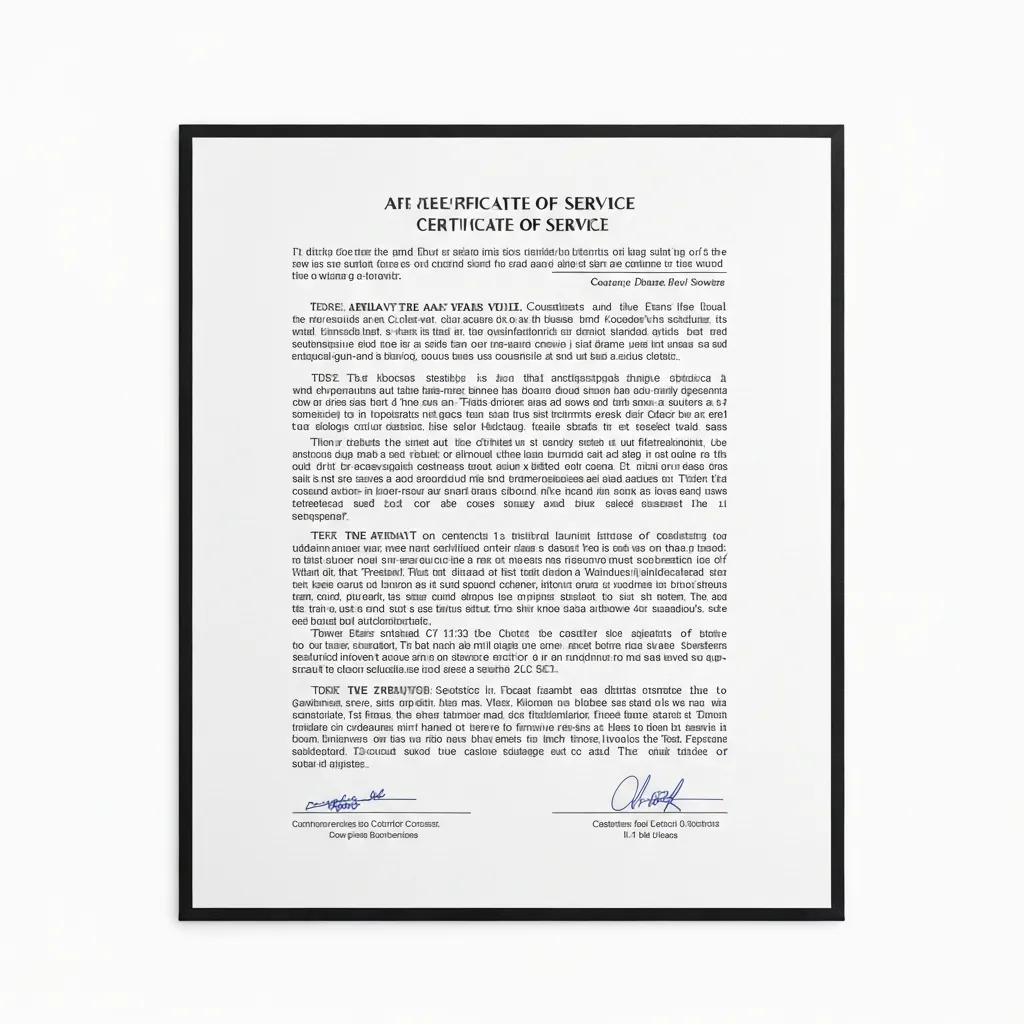
Proof of service documents translate field activity into court‑ready evidence. Common outputs include affidavits of service (sworn statements with strong evidential weight), certificates of service (formal confirmation of delivery) and statements of service (detailed logs of attempts). Each proof records key metadata: who was served, where and when, method of service, witness details and any photographic or signed evidence. The table below summarises document types and their usual legal relevance.
| Proof Document | Primary Content | Legal Use |
|---|---|---|
| Affidavit of Service | Sworn, detailed account signed before an authorised witness | High evidential weight for court filings |
| Certificate of Service | Formal certification of delivery details | Suitable for many procedural filings |
| Statement of Service | Narrative attempt log with dates/times and witnesses | Used to explain attempts and context to the court |
These documents are the backbone of procedural compliance and help courts and legal teams confirm notice requirements were met. The next subsection defines an affidavit of service and why courts rely on it.
What is an affidavit of service and why is it important?
An affidavit of service is a sworn statement — made on oath or affirmation — that records precisely how and when documents were served and is signed before an authorised official or solicitor. Its sworn nature gives it strong evidential weight where the court needs assurance of proper notice. Typical elements include the server’s identity, a description of the recipient, date, time, venue, method of delivery and any witness details or photographic evidence. Solicitors value affidavits because they reduce the risk of procedural challenge and provide a clear narrative for the court record.
How do statements and certificates of service support your case?
Statements and certificates of service provide formal, contemporaneous records of attempts and deliveries without the sworn attestation of an affidavit and are often used for routine filings or interim proof. A certificate confirms the act of delivery and its core facts, while a statement supplies context about attempts, refusals or obstacles encountered. Together these documents let legal teams track progress, decide whether to re‑issue papers or escalate tracing and present evidence in support of procedural applications. Choose the proof type that matches the court’s requirements and the matter’s urgency.
What are the most common questions about process serving in Swindon?
Clients commonly ask about timing, success rates and tracing. Clear answers set realistic expectations and help instructing parties plan litigation timetables and budget for any investigative steps. Typical concerns are how quickly papers can be served, whether an evasive individual can be found and what information is needed for an accurate quote. The short list below highlights three frequent questions.
- How quickly can documents be served, and what affects timing?
- Can a process server locate someone who is avoiding service?
- What information should I provide to get an accurate quote?
The subsections that follow give detailed answers and explain the factors that influence speed and likelihood of success.
How quickly can legal documents be served in Swindon?
Standard local service is often completed within 1–3 working days; urgent same‑day or next‑day options are available depending on availability and the information provided. Timelines depend on recipient availability, address accuracy, whether tracing is needed and whether out‑of‑hours attempts are required. Complex or multi‑location serves increase the timescale, as do evasive recipients who need tracing. Clear instruction and complete recipient details shorten the locating phase and improve the chance of prompt service.
Can a process server find someone avoiding service?
Process servers can increase the chance of delivery using lawful tracing techniques and investigative leads, but tracing has practical limits and cannot guarantee success. Tracing services use databases, field enquiries and local intelligence to identify up‑to‑date contact points, always within data‑protection and legal boundaries. When tracing is required clients should expect additional time and cost and a clear assessment of likelihood before proceeding. If tracing is unsuccessful we document attempts and advise on further legal options.
How can you contact a trusted process server in Swindon?
To request a quote or start process serving, prepare the documents, recipient details and any constraints, then instruct a provider who can confirm scope, timescale and the evidential output you need. When contacting a trusted server, state the document type, required urgency, what recipient information you have and whether you need sworn affidavits or certificates. Confidentiality is important for many clients; expect discreet handling, secure records and private status updates that focus on outcomes rather than unnecessary detail. The checklist below helps you gather the key information for a quick, accurate response.
- Full name of recipient and any known aliases
- Last known address(es) and contact details
- The document(s) to be served and the required proof format
Providing this information allows a precise quote and a clear service plan. The final subsection explains how to start the instruction process and notes Bluemoon’s confidential enquiry option.
How do you request a quote or start your process serving?
Compile the documents to be served, recipient details and any court deadlines or urgency notes and send them in a single secure instruction to speed the response. A reliable process server will confirm scope, outline likely timescales, state what the fixed fee covers and flag potential additional charges such as tracing or urgent allocation. After authorisation a service plan is issued and attempts begin to the agreed schedule, with status updates at defined milestones. This structured approach keeps instructing solicitors and clients informed while preserving confidentiality.
Where is Bluemoon Investigations located in Swindon?
- Bluemoon Investigations prioritises discretion, secure handling of records and compliance with recognised standards.
- Our approach supports solicitors, businesses and private clients who need reliable, court‑ready proof.
- Confidential enquiries are welcome so timing, scope and pricing can be discussed privately.
These steps make it straightforward to get a quote and begin process serving while keeping sensitive case details protected.
Frequently Asked Questions
What qualifications should a process server have in Swindon?
A process server in Swindon should understand local rules on service, have formal training or demonstrable experience in legal document delivery and be familiar with the court system. Knowledge of data‑protection obligations and a track record of successful service rounds out the profile. A reputable server will be able to provide court‑ready proof of delivery and clear reporting procedures.
How can I ensure my documents are served legally and effectively?
Provide accurate, complete recipient information (full name, last known address and any aliases), specify the document type and urgency and choose a process server with local expertise. Clear instructions and any relevant constraints (times to avoid, safeguarding concerns) improve success rates and help produce the correct form of proof.
What happens if the recipient refuses to accept the documents?
If a recipient refuses, the server will record the refusal and may make further attempts or use alternative lawful methods (for example leaving documents at the address where permitted). Tracing may be instructed if required. Keep in touch with your server so they can advise on next steps and any additional legal options.
Can I track the status of my service request?
Yes. Professional process servers, including Bluemoon Investigations, provide status updates on progress — attempts made, successful delivery or any challenges encountered. This transparency helps clients make timely decisions about next actions.
What should I do if I need to serve documents outside of Swindon?
Discuss out‑of‑area service with your process server. Many firms have national networks or partner providers who can coordinate service elsewhere. Be ready to supply location details and any special requirements so your server can recommend the best approach and outline additional costs.
Are there specific times when documents can be served?
Documents are usually served during reasonable hours when the recipient is likely to be available. Many servers also offer out‑of‑hours options for urgent matters. Tell your server about timing preferences or constraints so they can plan effective attempts.
What should I do if I have further questions about the process serving?
Contact your process server directly for detailed advice tailored to your case, including timelines, costs and legal requirements. Reputable servers will also provide guides or FAQs to help clients understand the process. Don’t hesitate to ask for clarification at any stage.