
Process Server Southampton
All enquiries handled in complete confidence.
Your Trusted Southampton Process Servers
Process Serving in the Southampton area for over 40 years

Trusted Process Servers in Southampton
- Fast, CPR-compliant process serving across Southampton
- Documents served: statutory demands, injunctions, divorce petitions, witness summons
- Handled with precision, discretion, and full legal compliance
- Up to three delivery attempts included
- Proof of service supplied for your records
Call our Southampton Process Serving Office today on 023 8001 6218 or email us at process@bluemooninvestigations.co.uk
CPR-Compliant Service
Our experienced process servers deliver documents strictly in line with Civil Procedure Rules. From court papers to statutory demands, we ensure every instruction is handled with precision and legal accuracy.
Nationwide Coverage
With trusted process servers across the UK, we handle instructions quickly and efficiently, wherever service is required. Local knowledge combined with national reach ensures timely delivery in any jurisdiction.
Confidential & Discreet
We handle every instruction with complete confidentiality and discretion. Sensitive information is protected, and all cases are managed with the highest professional standards.
Timely & Reliable
Deadlines matter in legal proceedings. Our team is committed to prompt service, with attempts made within agreed timescales and full proof provided, giving you confidence your case stays on track.
Select the process serving option that best meets your case requirements — each delivered with full legal compliance and professional care.
Fixed-Fee, CPR-Compliant Service
Basic Process Serve
Fixed Fee – No Hidden Costs
One Service Attempt Included
Ideal for Non-Urgent Matters
First Attempt Within 7 Days
CPR-Compliant Procedure
Proof of Service Provided
Printing Up to 25 Pages Included
Prices from £110
Fixed-Fee Service with Full Updates
Standard Process Serve
Fixed Fee – No Hidden Costs
Up to 3 Service Attempts Included
First Attempt Made Within 24–48 Hours
CPR-Compliant Procedure
Proof of Service Provided
Live Updates After Every Attempt
Printing Up to 50 Pages Included
Prices from £165
Fixed-Fee Urgent Service – First Attempt Within 24 Hours
Priority Process Serve
Fixed Fee – Clear and Upfront Pricing
Prompt Allocation to Nearest Server
First Attempt Made Within Hours
CPR-Compliant Procedure
Proof of Service Provided
Live Updates After Every Attempt
Printing Included Up to 50 Pages
Prices from £195
What is Process Serving in Southampton?
Process serving in Southampton is the formal delivery of legal documents, carried out in line with the Civil Procedure Rules (CPR). Our experienced Southampton process servers act for solicitors, businesses, private clients, and the courts, ensuring documents are served correctly and proof of service is provided. Where recipients are evasive, we use tracing methods or apply for substituted service to complete delivery in full compliance with the rules.
How Our Southampton Process Serving Works
Standard Procedure
- Receipt & Confirmation – As soon as we receive your documents, we email you confirmation of safe receipt.
- Case Management – All details are securely logged in our client management system, with digital copies created where needed.
- Assignment – Your instruction is allocated to our nearest available Southampton process server for speed and efficiency.
- First Attempt – We aim to carry out the first visit within 24 hours, if using our Standard Service.
- Multiple Visits – If service cannot be completed immediately, up to three attempts are made at varied times of day.
- Client Updates – You receive real-time progress reports throughout the process.
- Further Instructions – Any issues are referred back to you promptly for guidance.
- No Unauthorised Costs – We never incur additional expenses without your prior consent.
What Happens Next
- Successful Service – Once good service is achieved, we prepare all required paperwork (including swearing, if necessary). Hard copies can be posted, or digital copies supplied for speed.
- Unsuccessful Attempts – If service cannot be achieved, our process server prepares a detailed witness statement with supporting evidence of attempts, assisting any application for substituted service.
Our Quality Assurance for Process Serving in Southampton
At Bluemoon Investigations, we are committed to providing a reliable, transparent, and CPR-compliant process serving service across Southampton.
Our Promises:
- Full CPR Compliance – every serve is carried out in line with Civil Procedure Rules.
- Prompt Action – first attempts made quickly, with most serves completed within 48 hours.
- Fixed Fees – clear, upfront pricing with no hidden costs.
- Proof of Service – digital certificates supplied, hard copies available on request.
- Real-Time Updates – progress reports after every attempt.
- Priority Service Available – urgent instructions actioned within hours where required.
Ajay Singh
“Bluemoon served urgent legal documents on our behalf quickly and discreetly. Their updates throughout the process gave us complete confidence.”
Samuel Ogindae
“We needed a statutory demand served on short notice. Jason handled it professionally, with sworn proof of service provided without delay.”
James Askwith
“Our firm uses Bluemoon regularly for process serving. They are reliable, compliant with the rules, and always deliver affidavits on time.”
Prefer to Speak to Someone First?
No forms, no waiting — just straightforward help from an experienced Southampton process server. Call our Southampton office on 023 8001 6218 or email process@bluemooninvestigations.co.uk and we’ll respond promptly to guide you through your next steps.
Process Serving in Southampton, but with Compassion
The role of a process server in Southampton often involves delivering difficult news—something people may not want to receive. We understand that serving legal documents can sometimes provoke strong emotions and, in rare cases, even lead to confrontation.
Our approach is always to serve with professionalism and compassion. At the same time, every one of our agents is trained to recognise when a firmer stance is needed to ensure the papers are served correctly and without delay.
With extensive experience and specialist training, our Southampton process servers are equipped to handle all situations calmly and effectively, ensuring the task is completed with dignity, discretion, and professionalism.
Morris McNulty
“An evasive respondent made service difficult, but Bluemoon’s persistence and detailed witness statement supported our application for substituted service.”
Susanne Leftwich
“The process server kept us informed at every stage and ensured the papers were served within the required timescales. Excellent service.”
Greta Arben
“Bluemoon’s process serving is thorough and efficient. Three visits were made as standard, and the final proof was court-ready.”
Local Process Serving Offices in Southampton
- Process Server Southampton – covering Southampton City Centre, Ocean Village, Portswood, Shirley, Bitterne and Woolston.
- Process Server Eastleigh – including Eastleigh, Chandler’s Ford, Bishopstoke and Boyatt Wood.
- Process Server Winchester – covering Winchester, Kings Worthy, Weeke and Badger Farm.
- Process Server Fareham – including Fareham, Portchester, Whiteley and Stubbington.
- Process Server Totton – covering Totton, Calmore, Hounsdown and Ashurst Bridge.
- Process Server Romsey – including Romsey, Abbey Park, Whitenap and nearby villages.
- Process Server New Forest – covering Lyndhurst, Hythe, Marchwood, Ashurst, Holbury and surrounding New Forest communities.
Useful Resources for Process Serving in Southampton
Understanding the legal and compliance framework around process serving is essential. These trusted resources provide guidance and context:
- UK Government – Civil Procedure Rules (Part 6: Service of Documents)
- HM Courts & Tribunals Service
- Citizens Advice – Legal System Overview
- Law Society – Find a Solicitor
- GOV.UK – Court and Tribunal Forms (including N215 Statement of Service)
Regional Process Serving Hubs
Process Server Portsmouth ·
Process Server Bournemouth ·
Process Server Nottingham ·
Process Server Leeds ·
Process Server Liverpool
Other Services in Southampton
In addition to professional process serving, Bluemoon Investigations provides a full range of investigative services across Southampton.
- Private Investigation Southampton
- People Tracing in Southampton
- Surveillance Services
- Background Checks
Wherever you are based in Southampton or the surrounding towns, our team delivers fast, discreet, and compliant investigative solutions.
Expert Process Server Southampton – Dependable, Compliant Legal Document Delivery (Urgent & Fixed‑Fee Options)

Process serving in Southampton means legally delivering court papers and formal documents so proceedings can move forward with court‑ready evidence. This guide explains how professional process servers work locally, why precise service matters in family, civil and High Court cases, and how fixed‑fee and urgent options operate in practice. You’ll find clear explanations of the common document types served in Southampton, the step‑by‑step workflow from instruction to affidavit, how tracing improves success rates, and what to expect on cost and timing when urgency is required. We also cover compliance and evidential standards and offer practical pointers for evaluating providers and the proof produced for hearings. If you need a discreet, reliable service or want to know the practical steps before instructing a process server in Southampton, the sections below set out the options, costs and operational details you can act on straight away.
Why Choose Bluemoon Investigations as Your Process Server in Southampton?
A good process server combines local knowledge, procedural discipline and strict confidentiality so documents are delivered and proof is admissible in court. Working with an experienced provider reduces the chance of failed attempts that delay proceedings, improves identification at attendance and ensures affidavits and certificates meet evidential standards. Confidential handling and data protection are especially important in family or contested civil matters — our GDPR‑compliant procedures keep client and subject data secure. Below we list the main reasons to instruct a professional process server for Southampton matters and explain how those strengths affect case outcomes.
Bluemoon Investigations combines dedicated local capability with national coordination for process serving in Southampton. Our network of local investigators gives efficient coverage while keeping a single point of contact for case management, which simplifies escalation and urgent instructions. The subsection that follows describes the experience and client types we typically support.
What Experience and Expertise Does Bluemoon Bring to Southampton Process Serving?
Bluemoon Investigations acts as a central hub with nationwide private investigation resources, including local investigators covering Southampton. We have practical experience across legal sectors and routinely support solicitors, businesses, insurers and private clients with process serving needs. That reach allows coordinated attendance attempts and quick escalation where a dedicated case manager is needed for urgent work. In day‑to‑day practice our teams handle family court documents, civil claims and writs, tailoring attendance methods to the document type and recipient risk. That experience reduces wasted visits and helps produce admissible reports for instructing parties. The next subsection explains how we protect confidentiality and maintain compliance at every stage.
How Does Bluemoon Ensure Confidentiality and Legal Compliance in Southampton?
We manage confidentiality through GDPR‑compliant workflows, secure communications and strict evidence handling to preserve chain of custody for documents and reports. Our case management limits disclosure to authorised contacts and safeguards personal data gathered during tracing or attendance, reducing exposure in family or contested matters. Evidence is collated to court standards — usually a signed affidavit or certificate, time‑stamped notes and supporting images — so proof of service is admissible and clearly presented. These compliance measures also streamline solicitor workflows because documentation arrives structured for filing. The section that follows lists the legal documents commonly served and any special handling they require.
What Types of Legal Documents Can Be Served by a Process Server in Southampton?

Process servers in Southampton deliver a wide range of court and statutory documents where correct service and admissible proof are essential. Work covers family and civil matters through to High Court writs and possession notices, with some categories requiring welfare or safety checks during attendance. Knowing which documents fall into each group and the usual evidence required helps instructing parties choose the right service level — for example out‑of‑hours attendance for sensitive family cases or verified ID checks for High Court writs.
Introductory table: common document categories, typical requirements and special handling notes.
| Document Type | Typical Requirements | Example / Notes |
|---|---|---|
| Divorce papers / petitions | Proof of personal service or permitted alternative service | Handled with respect and welfare awareness |
| Non‑molestation / occupation orders | Confidential handling, out‑of‑hours options | Welfare considerations; avoid actions that could escalate contact |
| High Court writs / summonses | Identity verification, possible multiple attendances, sworn affidavit | High evidential standard; precise time and location records |
| Possession notices / statutory demands | Timely delivery and clear receipt evidence | Often time‑sensitive for court deadlines |
| Subpoenas / witness statements | Secure transfer and maintained chain of custody | Clear logging of handover to recipient |
This table shows how document type determines procedural choices; the next subsection expands on family and civil document specifics.
Which Family and Civil Court Documents Do We Serve in Southampton?
We commonly serve divorce petitions, non‑molestation and occupation orders, witness statements and breach or enforcement papers. These matters often need sensitive handling, including welfare checks and options for discrete or out‑of‑hours attendance to protect vulnerable people. For family cases we adjust timing and approach to reduce distress while ensuring service is evidenced; for civil matters such as witness statements, securing a reliable handover and recording any refusal is critical. Clear communication with instructing solicitors about welfare concerns and method of service improves the chance of successful, uncontested proof. The following subsection covers higher‑risk or high‑evidence documents.
How Do We Handle High Court Writs, Summonses, and Possession Notices?
High Court writs and similar high‑importance documents require higher verification and evidence standards to satisfy courts. Typical procedures include confirmatory identity checks, possible multiple attendances and the preparation of sworn affidavits or certificates of service detailing time, location and observations. For possession notices, prompt attendance and accurate timestamping are crucial to meet legal deadlines; contested or evasive situations may lead to tracing or further field enquiries. To ensure admissibility we document every stage carefully and prepare evidence in formats recognised by legal teams. The next section outlines the operational flow from instruction to proof of service.
How Does the Process Serving Service Work in Southampton? Step-by-Step Guide
Process serving follows a repeatable sequence that begins with instruction and ends with court‑ready evidence, removing uncertainty for instructing parties. The workflow balances planning, targeted attendance and clear documentation to maximise success while limiting unnecessary visits. Each case is assessed for risk and sensitivity, and attendance strategies are set accordingly — for example day‑time versus out‑of‑hours attempts — with tracing used where addresses are uncertain. Below is a numbered guide detailing the typical stages from instruction to closure and what you can expect to receive.
The typical process serving sequence includes these steps:
- Instruction and case assessment: collect documents, confirm recipient details and define service objectives.
- Planning and briefing: choose attendance windows, allocate a local investigator and set any welfare measures.
- Tracing if required: locate evasive recipients using databases and on‑the‑ground enquiries to reduce wasted visits.
- Attendance attempts: carry out one or more visits with identity checks and full attempt records.
- Evidence preparation: assemble affidavit/certificate, photographs and time‑stamped notes into a single report.
- Delivery of proof and case closure: supply court‑ready documentation and a concise summary to the instructing party.
This step‑by‑step overview shows how transparent processes cut delays; the next subsection explains the formats used for court‑ready proof and how clients are kept informed during the case.
What Are the Key Stages from Instruction to Proof of Service?
The key stages begin with an instruction that specifies the document and desired outcome, followed by planning to set attendance windows and risk posture. If the address is incomplete or the recipient evasive, tracing may be carried out before attendance to preserve resources and raise success rates. Attendance attempts are logged in detail — noting time, place, interaction and any photographic evidence — and escalated if more attempts or specialist checks are needed. The final stage is evidence collation: a signed affidavit or certificate of service together with supporting media and a narrative report sent to the instructing solicitor or client. Regular updates during the process keep expectations clear and reduce follow‑up queries. The next subsection covers evidence formats and update practice.
How Do We Provide Court-Ready Proof and Client Updates?
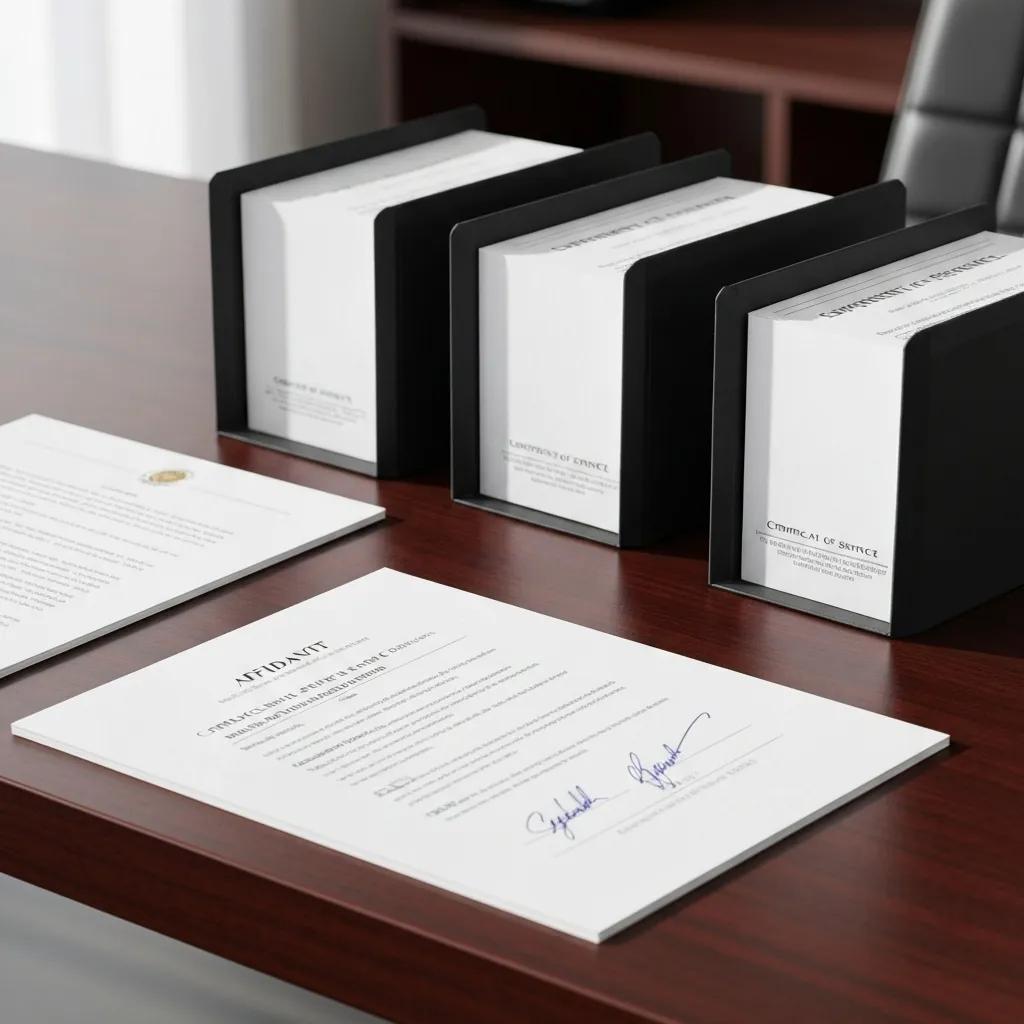
Court‑ready proof usually consists of a signed affidavit or certificate of service supported by time‑stamped photographs, GPS coordinates where permitted and a detailed attendance narrative. These elements create a coherent file solicitors can rely on when filing proof with a court and reduce the risk of challenge. Clients receive immediate confirmation of successful service by phone or secure message and a written report with the affidavit attached; failed attempts are reported with recommended next steps, such as tracing or further attendances. Secure handling and clear documentation protect client confidentiality and make subsequent legal steps straightforward. The following section explains pricing and urgent service options in Southampton.
What Are the Costs and Urgency Options for Process Serving in Southampton?
Clear pricing and defined urgent service routes help instructing parties choose the right cover and avoid surprise charges. Fixed‑fee options typically include a set number of attendance attempts and delivery of court‑ready proof, while urgent or same‑day services are available for time‑sensitive matters with agreed service levels. Additional costs can apply for long travel, specialist tracing or out‑of‑hours attendance and will be declared at instruction for transparency. The table below summarises common service options, what they include and indicative pricing or SLA guidance to aid purchasing decisions.
Introductory table: service options, inclusions and indicative price/SLA.
| Service Option | Inclusions | Indicative Price / SLA |
|---|---|---|
| Fixed‑fee standard serving | 1–2 attendance attempts, affidavit/certificate, written report | From £110 / standard response |
| Urgent / same‑day serving | Priority allocation, immediate attendance where possible, expedited report | Additional premium / subject to availability |
| Tracing + serving package | Address search, local enquiries, subsequent attendance | Variable / quoted per case |
| Extra attendances or travel | Additional visits and mileage outside standard area | Charged as extra / quoted upfront |
The table sets out starting points and where extra charges may apply; the following subsections explain what fixed fees usually include and how to request urgent service.
What Does the Fixed Fee Process Serving in Southampton Include?
A fixed fee usually covers a set number of attendance attempts, preparation of an affidavit or certificate of service and a written report detailing attempts and outcome. The standard starting point is from £110, which covers basic delivery and the standard evidential file; items outside the agreed scope — such as specialist tracing, significant travel or out‑of‑hours attendance — will be listed as extras. This transparent model helps solicitors and instructing parties budget and reduces uncertainty about deliverables. If the fixed‑fee attempts are unsuccessful we will advise on tracing or further attendances to progress the matter. The next subsection explains how to access urgent service when court deadlines or enforcement timetables demand immediate action.
How Can I Access Urgent or Same-Day Process Serving Services?
Urgent or same‑day services are offered subject to local availability and case specifics and normally require direct contact so we can prioritise allocation and confirm any premium. When instructing urgent work provide a clear brief, the reason for urgency and preferred contact details so a case manager can assess feasibility and respond quickly. Response times depend on locality and case complexity; we confirm availability and any surcharge before proceeding to keep things transparent. For time‑critical matters tell us about urgency at instruction so prioritisation and escalation procedures can be activated promptly. The next section explains how tracing supports serving where recipients are evasive.
How Does People Tracing Support Process Serving in Southampton?
People tracing locates recipients who have moved, use aliases or deliberately avoid service and is an essential adjunct when standard attendance attempts fail. Tracing combines database checks, local enquiries and behavioural profiling to identify likely current addresses and the best contact windows for attendance. Where tracing is offered on a conditional basis — for example “no find, no fee” — instructing parties can limit the financial risk of unsuccessful searches. The table below outlines common tracing options, typical guarantees and how costs are usually structured relative to success.
Introductory table: tracing options, guarantees and cost models.
| Tracing Option | Success Guarantee | Cost Model |
|---|---|---|
| Standard trace | No guaranteed find | Fixed fee or hourly rate |
| Targeted local enquiries | Higher local success likelihood | Quoted per assignment |
| No Find, No Fee trace | Client charged only if subject is located | Contingent fee model |
| Specialist database trace | Access to premium records | Subscription or per‑trace charge |
The table shows how tracing choices affect risk and cost; the next subsections define the no‑find, no‑fee mechanism and explain how tracing improves success rates.
What Is “No Trace, No Fee” Tracing and How Does It Work?
Under a “No Trace, No Fee” arrangement the client pays the tracing fee only if the subject is located, protecting instructing parties from the cost of unsuccessful searches. Operationally the tracer conducts agreed checks and local enquiries; if a viable current address or reliable contact is found the tracing fee becomes payable and the case moves to attendance attempts. The scope should be clear about what counts as a successful find, which records were searched and whether subsequent serving is included or charged separately. This contingency approach is useful where the likelihood of finding a subject is uncertain and helps preserve budgets for contested or complex matters. The next subsection explains how tracing raises service success in practical terms.
How Does Tracing Improve Success Rates for Legal Document Delivery?
Tracing raises success rates by verifying or updating contact details, identifying the best times or locations for attendance and revealing aliases or alternative addresses ordinary checks might miss. Methods include database searches, local enquiries, electoral and property checks where permitted and discreet interviews with neighbours or local contacts to confirm presence patterns. By reducing blind attendances and targeting efforts where the subject is most likely to be found, tracing cuts wasted visits and lowers the overall cost per successful service. For evasive recipients or incomplete addresses, tracing is a cost‑effective precursor to further attendance attempts and often improves overall efficiency.
What Are the Most Common Questions About Process Serving in Southampton?
This FAQ section answers frequent practitioner and client questions in concise, actionable terms to help you decide and prepare next steps. Answers reference typical starting costs, expected timelines and practical selection criteria for choosing a reliable process server. If you need confidential advice about a case or an urgent requirement, a discreet enquiry route is available to assess options and confirm pricing. The short answers below are designed to give immediate clarity and indicate when tracing or urgent allocation is recommended.
How Much Does a Process Server Cost in Southampton?
Standard fixed‑fee process serving starts from £110 and typically covers the core attendance attempts plus delivery of a certificate or affidavit of service. Final cost depends on factors such as the number of attendances needed, travel outside the core area, specialist tracing and any out‑of‑hours or urgent premiums. For an accurate quote provide full case details including document type, recipient information and any sensitivity concerns so we can scope the instruction and list likely extras. Transparent itemisation of what the fixed fee includes helps you budget and decide whether conditional tracing or urgent allocation is appropriate.
How Long Does It Take to Serve Legal Documents in Southampton?
Timelines range from same‑day or 24‑hour urgent attendance where resources allow, to standard windows of 48–72 hours for non‑urgent instructions, and longer if tracing is required. Speed is affected by address accuracy, subject evasiveness, court deadlines and local investigator availability. When time is critical state the urgency at instruction so the case manager can prioritise allocation and advise realistic SLAs. If tracing is needed, allow extra time for searches before attendance to avoid ineffective visits and increase first‑pass success.
How Do I Find a Reliable Process Server in Southampton?
Judge a provider by clear criteria: demonstrable local experience, evidence‑standard reporting (affidavit/certificate), transparent fixed fees with defined inclusions and secure data handling that complies with GDPR. Prefer firms that offer a single point of contact or case manager for urgent matters and who can add tracing to improve outcomes. For sensitive or urgent cases ask about out‑of‑hours options and how evidence will be packaged for court. If you’d like a confidential discussion about instructing a trusted local process server with nationwide support, contact Bluemoon Investigations by phone or email to outline your case and receive a tailored quote and availability.
Selection criteria summary:
- Experience with family, civil and High Court documents.
- Evidential standards: affidavits, certificates and supporting media.
- Transparent pricing with clear inclusions and triggers for extra fees.
This completes the FAQ and the practical guidance needed to instruct a process server for Southampton matters. If you need confidential advice, immediate allocation for urgent service or a bespoke tracing package to support effective serving, contact Bluemoon Investigations by email or phone to discuss your instruction and get a quote.
Frequently Asked Questions
What should I consider when choosing a process server in Southampton?
When choosing a process server look for local expertise, strict compliance with legal standards and robust confidentiality practices. Check their record with the document types you need served — particularly sensitive family or civil matters — and confirm they supply evidence that meets court requirements, such as affidavits or certificates. Transparent pricing and clear communication throughout the process are essential to keep your case on track.
How can I ensure my documents are served discreetly?
To ensure discreet service, instruct a process server who prioritises confidentiality and uses sensitive handling protocols. Discuss your concerns up front and ask about out‑of‑hours attendance or welfare checks for sensitive cases. A professional server will adapt their approach to minimise distress while ensuring the service is legally compliant and properly documented for court.
What happens if the recipient cannot be located?
If the recipient cannot be found, a professional process server will usually offer tracing — using database searches, local enquiries and other investigative methods to locate the individual. Many providers offer a “No Trace, No Fee” option so you pay only if the subject is located. Tracing helps reduce delays and increases the chance of ultimately completing service.
Are there additional costs for urgent service requests?
Yes — urgent requests often attract a premium. Providers charge extra for same‑day or expedited services to prioritise the work. Discuss potential surcharges at instruction and confirm what the urgent service includes, such as immediate attendance and expedited reporting, to avoid surprises on the final bill.
How do I know if my documents have been served successfully?
A reputable process server will provide proof of service, typically a signed affidavit or certificate plus supporting items such as time‑stamped photographs and detailed attendance notes. You should receive immediate confirmation of successful service and a written report. If service is unsuccessful the provider should explain next steps, including tracing or further attendance options.
What types of documents require special handling during service?
Documents such as non‑molestation orders, divorce papers and High Court writs often need special handling because of their sensitivity. That can include welfare checks, out‑of‑hours attendance or identity verification to meet legal standards. Discuss the document specifics with your process server so they can apply the correct approach and reduce the risk of later challenges in court.
Can I track the progress of my service request?
Most professional process servers provide regular updates by phone or secure messaging so you can track progress. A dedicated case manager can advise on the status of attempts and any issues encountered. Clear, ongoing communication ensures you remain informed and can make timely decisions as the case progresses.